Followers

Monday, 25 June 2018

Jeanne Hachette, the heroine of Beauvais


Close to the centre of the city of Beauvais, 50 miles north of Paris, is a bronze statue of a young woman who holds a captured standard in one hand and a vicious-looking hatchet in the other. This is “Jeanne Hachette”, who lived in the 15th century and is credited with saving the city from being overrun by a besieging army.

Her actual name was Jeanne Laisné, the daughter of a local butcher. She lived in the walled city of Beauvais at a time of conflict between King Louis XI and Charles the Bold, Duke of Burgundy, who were fighting over the control of France.

In the spring of 1472 the Duke’s troops were advancing on Beauvais. They had already taken the smaller city of Nesle, to the north-east, which had made the mistake of surrendering to the Burgundians. This had not stopped the Duke’s men from bursting in and killing all the people they could find, many of whom had fled to the church as a place of refuge.

The citizens of Beauvais were therefore determined to put up the strongest resistance they could. On 27th June the Duke’s men lay siege to the city walls, erecting siege ladders so that they could swarm over the top.

Nobody fought as fiercely as Jeanne Laisné, who armed herself with a hatchet from her father’s butcher’s shop. Her most prominent victim was the Duke’s standard-bearer – seizing the standard was a moral victory that gave heart to all her fellow defenders, who no doubt saw Jeanne as a reincarnated Joan of Arc.

Duke Charles failed in his aim of capturing Beauvais and was forced to withdraw after 25 days. Beauvais had its eternal heroine.

© John Welford

Wednesday, 6 June 2018

The duel fought between Alexander Hamilton and Aaron Burr


On 11th July 1804 Alexander Hamilton was fatally wounded in a duel fought against Aaron Burr, who was then Vice-President of the United States of America. 

Hamilton was one of the founding fathers of the United States, but unlike George Washington, John Adams and Thomas Jefferson, he never became President.

Hamilton was a strong believer in a centralised United States, with the emphasis on ‘United’, but Aaron Burr, a fellow New York politician, was more interested in the ‘States’, preferring a looser confederation. This difference of opinion led to considerable friction between the two men.

Trouble flared in 1800 when there was much confusion over who should be President and who should be Vice-President. As the Constitution was at the time, it was up to Congress to make the decision, and Burr became convinced that Hamilton had thrown his weight behind Jefferson.

In 1804 Burr had further cause for grievance when Hamilton thwarted his attempt to become governor of New York.

Many cross words were said on both sides, with Hamilton accusing Burr of dishonourable behaviour. This led Burr to challenge Hamilton to a duel. 

Duelling was forbidden in New York, so the opponents and their seconds crossed over to New Jersey. The duel was fought at the same place where Hamilton’s son Philip had been killed in a duel three years earlier. 

The tradition of pistol duelling between gentlemen held that honour would be satisfied if both parties aimed to miss. Hamilton appears to have followed this tradition, but Aaron Burr did not. Hamilton was hit in the abdomen and died 28 hours later, despite the efforts of New York’s best surgeons to save him.

The affair did not end well for Aaron Burr either. He served out his term as Vice-President but held no further political office. History remembers Alexander Hamilton with much greater appreciation than is given to Aaron Burr.

© John Welford

Wednesday, 16 May 2018

The rivalry between Benjamin Disraeli and William Ewart Gladstone


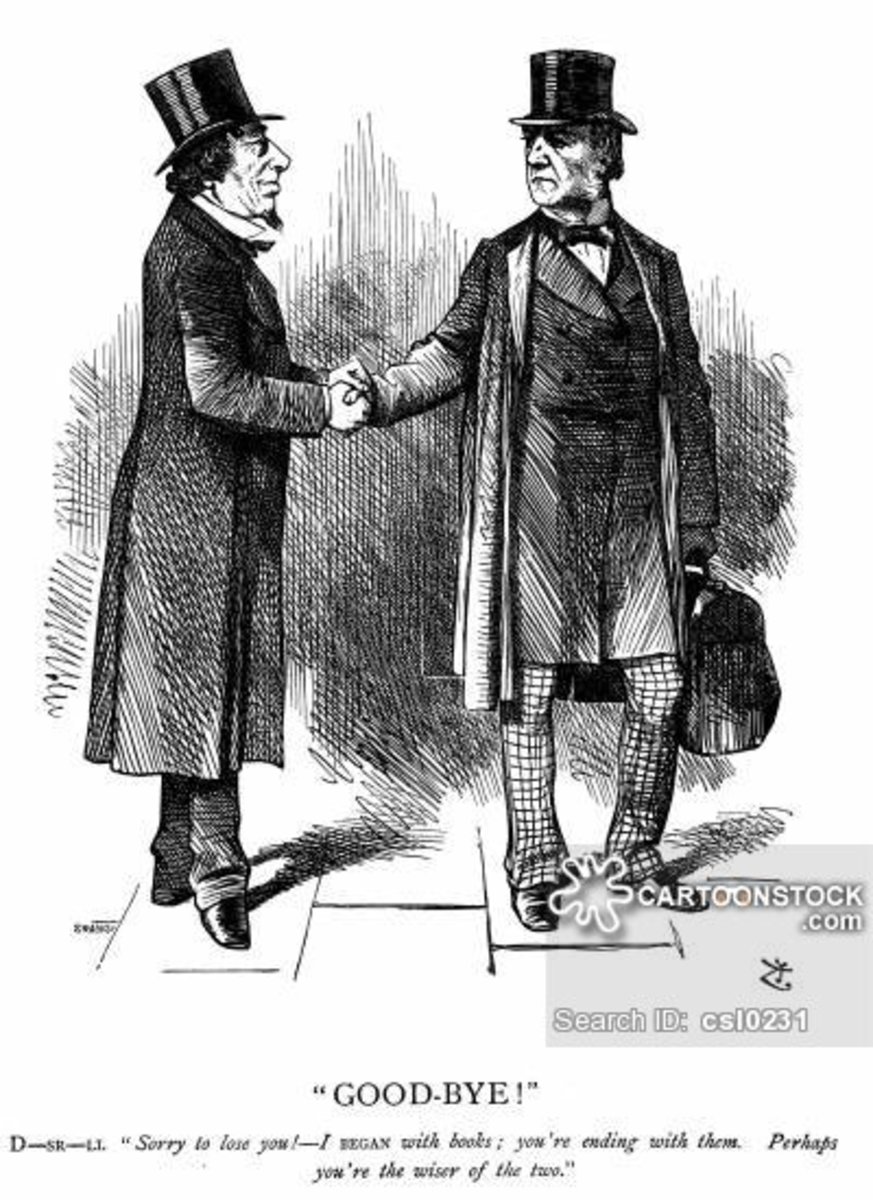
Disraeli and Gladstone

William Ewart Gladstone (1809-98) and Benjamin Disraeli (1804-81) are generally thought of as the two greatest British Prime Ministers of the 19th century. They were both statesmen and politicians of the highest rank who made enormous contributions to the well-being of their country. And they absolutely loathed each other. It could be said that the greatness of both men was largely due to that loathing, as each was determined to outdo the other over a period of at least thirty years.


Differences in character and background

The mutual hatred was only partly political, Disraeli being a Conservative and Gladstone a Liberal, as the two men were very different in personality and character. Although they were both highly intelligent and ambitious, Disraeli was a man of wit and dash, a latter-day dandy who enjoyed the good things of life, whereas Gladstone was serious-minded and unimaginative.  It would be hard to picture Gladstone sitting down to read a novel. Disraeli wrote them.

Gladstone was greatly admired by many in his party and beyond, who accorded him the nickname of “Grand Old Man”, or “G. O. M.” for short. Disraeli reckoned that the initials stood for “God’s Only Mistake”.

One problem that Disraeli always had was that he was a political outsider. He was Jewish by race, although his father had him baptised as a Christian when he was 13, otherwise his later political career would have been impossible. His features were “un-British”, his father having descended from a family of Arabian Jews and his mother being Italian. His background was middle-class and his education patchy. In his youth he had tried to invest in South American silver mines, but was financially ruined when the mines turned out to be worthless.

By contrast, Gladstone came from a solid upper-middle-class family of wealthy merchants. He was educated at Eton and Christ Church College, Oxford; although not an aristocrat by birth he followed the same course as many who were. He started his political life as a Tory, being opposed to democratic reform and the abolition of slavery.

Disraeli’s career as a Member of Parliament got off to a shaky start. He was elected in 1837 and made a very poor maiden speech that was dismissed with laughter and jeers. One of the jeerers was William Gladstone, who had five years’ more political experience despite being younger than Disraeli by five years.


Political clashes

The first political issue that divided the two men was that of protectionism versus free trade. In 1846 Gladstone and Robert Peel supported repeal of the Corn Laws that had prevented cheap grain from being imported and thus lowering the price of bread. The issue split the Tory Party (now known as the Conservatives) with Gladstone being one of many “Peelites” while Disraeli stayed put with those who opposed the repeal. So many talented MPs followed Peel that Disraeli was left as one of the few politicians of note who were capable of leadership on the Protectionist side. He therefore became the Conservative leader in the House of Commons by default.

In 1851 Disraeli became Chancellor of the Exchequer in the Conservative government led from the House of Lords by Lord Derby. He had little idea of how to run the finances of the country, any more than he could keep his personal affairs in order.

On 3rd December Disraeli presented his budget, which included several controversial points. In his speech he made a number of personal remarks about members of the opposition, including Gladstone. This clearly infuriated the younger man, who promptly lectured Disraeli about his bad manners. Gladstone also tore the budget apart, which was then voted down, leading to the immediate fall of the Government.

Gladstone was now Chancellor of the Exchequer in a Whig-Peelite coalition. By tradition, the outgoing Chancellor handed his robe to the incoming one, but Disraeli refused to do so. However, when he once again became Chancellor, in 1858, he had his own robe ready to wear.


Prime Ministers

Disraeli was the first of the two to become Prime Minister, which he did in 1868 when Lord Derby resigned on health grounds. Disraeli had been very effective in steering the 1867 Reform Act through the Commons, even attracting Gladstone’s reluctant admiration. However, the new Act called for a fresh general election, at which a large number of new voters had a chance to play a role in changing the political complexion, which they did by voting the Liberals (the name now used by Gladstone’s Peelite/Whig coalition) into power.

Gladstone stayed as Prime Minister until 1874, instituting a series of major reforms including his “mission to pacify Ireland”. Disraeli continued as Leader of the Opposition and spent the six years (when not writing novels) being a constant thorn in Gladstone’s flesh, but without ever sparking a major row. 

When Disraeli returned to power in 1874, this time for an extended stay in the Prime Ministerial role, he proved to be just as reforming as Gladstone, even taking over many Liberal policies and making them his own.

However, hostilities between the two men were to flare alarmingly in 1876 when the Ottoman Turks put down a rebellion in Bulgaria with excessive force. There were reports of terrible atrocities committed on the civilian population, with as many as 12,000 being killed. Disraeli claimed that the reports were exaggerated, but Gladstone went to great lengths to publicise the “massacre” and published a pamphlet entitled “The Bulgarian Horrors and Question of the East”, which had a wide readership.

For the 1880 General Election, Gladstone stood for the Midlothian seat in Scotland, which he cultivated in advance by making a series of long political speeches in the constituency. The “Midlothian Campaign” has been called the first modern political campaign in that Gladstone took the issues of the day out of the House of Commons and into the public domain, as well as vilifying his chief opponent on every conceivable occasion. He took Disraeli to task not only for Bulgaria but also for Britain’s military ventures in Afghanistan and South Africa.

Gladstone consequently won the 1880 election and became Prime Minister for the second time. Disraeli could not bring himself to congratulate his rival, only conceding that his defeat was caused by “the distress of the country”.


A rivalry ended by death

By this time, Disraeli (who had been ennobled as Lord Beaconsfield in 1876) was a sick man and he only had a year more to live. He died on 19th April 1881. As Prime Minister, Gladstone was obliged to give a eulogy in the House of Commons to a man he had detested for decades. He confined himself to talking about Disraeli’s “strength of will, long-sighted consistency of purpose, remarkable power of government and great parliamentary courage”. He later admitted that writing and delivering this speech was the hardest task he had ever had to undertake.

Gladstone had more work to do in Parliament, serving two further terms as Prime Minister and only finally stepping down in 1894 at the age of 84. He died on 19th May 1898, aged 88.


Queen Victoria’s opinion

The rivalry between Disraeli and Gladstone was settled in the former’s favour in the eyes of Queen Victoria. She had taken an immediate liking to Disraeli when he first became Prime Minister, as he had the gift of being able to listen to and empathise with people at all levels. The Queen had needed a friend to replace Prince Albert, her much-loved husband, who had died in 1861 and caused her to withdraw entirely from public life. Disraeli’s arrival as Prime Minister in 1868 started the process of her “restoration”.

However, the Queen was far less impressed by Gladstone, who was soon to replace Disraeli as her chief minister. Whereas she had enjoyed her weekly meetings with the charming Benjamin Disraeli, she complained that Gladstone “addressed me as though I were a public meeting”. Her dislike of Gladstone even went to the extent that, when the Liberal party won the 1880 election, she wanted Lord Hartington, the party leader, to be Prime Minister and had to be persuaded to ask Gladstone to form a government.


History’s verdict

It cannot be disputed that, of the two men, Disraeli was the more personable and likeable. However, although Gladstone might have given the impression of being stern and unbending this was partly a front, put on to hide a basic insecurity and shyness. He was capable of great generosity, as evidenced by his private work to help prostitutes escape from their pimps. He spent huge sums of money on this campaign, which was carried out in great secrecy and at personal risk to himself as he patrolled the London streets at night and helped prostitutes, some of them only children, to find a safe refuge.

They may have been the bitterest of rivals, but Gladstone and Disraeli were certainly two of the greatest politicians that Great Britain has ever had.


© John Welford

Tuesday, 8 May 2018

The death of William the Silent, 1584


William of Orange (usually known as “William the Silent”) has the dubious honour of being the first head of state to be assassinated by means of a handheld firearm. He was by no means the last.

Why Silent?

Many “titles” have been accorded to monarchs throughout history that typify certain features of their life or character, such as “Peter the Great” or “Ethelred the Unready”. One such is “William the Silent”, which seems to imply that he was some kind of Trappist monk. However, this is hardly a fair assessment of a statesman who is regarded by the Dutch as the father of his nation, and after whom the Dutch national anthem, the “Wilhemus”, is named.

His silence only refers to one phase of his life, when he refused to speak out in direct opposition to the Spanish king who oppressed the Netherlands, but he did not stay silent for ever, and it was when he broke out in rebellion that he changed the face of European history and set in train the events that led to his death. It is the particular features of that death that concern us here.

A wanted man

William of Orange, born in Germany in 1533 and brought up as a Lutheran, had become trusted by the Catholic King Philip II of Spain to the extent of being appointed governor general of Spain’s possessions in the northern parts of the Low Countries, which roughly equate to today’s Netherlands. Philip’s attempt to force Catholicism on a Protestant people was what led to rebellion and William’s refusal to continue to act, in silence, as his agent.

Many acts of violence and cruelty followed, leading eventually, in 1580, to Philip putting a price on William’s head, namely 25,000 gold crowns to whoever might “deliver him unto us quick or dead”.

The first attempt on William’s life

However, it was not until 18th March 1582 that the first serious attempt was made to claim the prize. An 18-year-old man, Jean Jauregay, approached William, apparently to present a petition to him, and instead fired a pistol at him at point-blank range. However, the gun had been loaded with too much powder and it exploded, injuring both William and Jauregay. A bullet hit William in the jaw, which thereafter made it difficult for him to eat, but he was still able to make a recovery. Jauregay, however, was immediately stabbed to death by William’s guards, who included his 14-year-old son.

This was the first assassination attempt in history made with a handgun, and it was unfortunately to be followed by many more down the centuries. This was made possible by the new technology of the wheellock, which worked similarly to a modern cigarette lighter in that a wheel was spun against a flint that caused a spark that ignited the charge. Previously, matchlock guns involved the lighting of a fuse (or “match”) that burned down until they reached the powder. Shots could therefore now be fired quickly and in secrecy, if necessary. However, Jauregay was a newcomer to firearms, and his inexperience caused his own death, not that of his target.

The assassination of William the Silent

The next attempt was carried out with better planning. Balthazar Gerard was a fanatical Catholic who had managed to gain employment in William’s household. On 10th July 1584 he bought a wheellock pistol from another member of William’s entourage, loaded it correctly with three bullets, and waited at the top of the stairs while William finished his lunch. As William approached, Gerard stepped forward and fired the pistol. William fell backwards down the stairs, and died without uttering a word.

Gerard, like Jauregay, did not live much longer himself, although his own death was drawn-out and painful, including having both his hands cut off, the skin of his chest torn off and salt applied to the bare flesh, and pieces of flesh torn out with red-hot pincers. The final act of his execution was for his heart to be ripped out.

The reward was duly paid by King Philip to Gerard’s family.

Ramifications of the assassination

The fact that a prince could be killed in his own palace, by a weapon that could be concealed until use, was something that had ramifications across Europe. In England, Queen Elizabeth was another obvious target of Philip’s long arm, and new measures were brought in that we would recognize today as basic security but were shocking at the time. Any foreign person entering the country had their person and baggage searched, and an order was given that no firearm could be carried within two miles of a royal palace.

Nervousness about Spanish plots was a major reason why Elizabeth signed the death warrant of Mary Queen of Scots.

There is little doubt that, had William the Silent not been the first victim of assassination by handgun, some other head of state would have claimed that dubious honour before long. However, the date of 10th July 1584 should be remembered as having a significance that has resounded down the centuries.

©John Welford


Monday, 7 May 2018

The coup d'etat of Claude-Francois Malet


These days we take instant communications for granted, but in the days before the telephone and the telegraph a well-placed, but false, piece of news could bring down an Empire. At least, that is what Claude-Francois Malet reckoned, and he very nearly succeeded.


A change of leader is announced

Early in the morning of 23rd October 1812, a fully-attired French general arrived at the Popincourt barracks in Paris. He introduced himself as General Lamotte and announced that Napoleon was dead, having been killed during the siege of Moscow, 600 miles away. He said that a Provisional Republic had been declared and that the National Guard must assemble immediately in the Place Vendôme. He produced a sheaf of papers that included a promotion for the commandant to whom he reported the news and orders for the release of two generals who had been imprisoned for falling foul of Napoleon, namely General Ladurie and General Guidal.

General Ladurie was delighted to find himself recalled to favour and proceeded to resume his old duties by giving orders to his troops. General Guidal, however, decided that his first “duty” was to get himself his first decent restaurant meal since his incarceration.

“General Lamotte” had little trouble getting people to believe him, given his perfect uniform and all those pieces of paper. Orders were given and many people leapt into action to seize important buildings in the city and arrest anyone who might oppose the new Republic.


The plot breaks down

However, one thing “Lamotte” had forgotten was to provide himself with documents that proved his own status. When one officer, a General Hulin, grew suspicious and asked to see Lamotte’s orders, the latter had no response to offer other than to shoot Hulin in the head. Shortly afterwards he was recognised by an officer who shouted out, “That’s not Lamotte, it’s Malet!” There had indeed been a real General Lamotte, who had been exiled to the United States and was therefore unlikely to have just hot-footed it from Moscow.


The imposter

Claude-Francois Malet, born in 1754 and therefore 58 at the time of the coup attempt, was a brigadier general in his own right who held strong revolutionary views. He had therefore fallen out of favour with Napoleon and been imprisoned as a result. While in prison he had hatched a plot with a fellow prisoner, the Abbé Lafon. Lafon was a royalist, so he had nothing in common with Malet apart from a hatred of Napoleon. However, he was an expert forger who was able to supply Malet with the papers that he was later to use to support his claims.

When all the pieces were in place they climbed the wall of the prison. Lafon promptly disappeared and only turned up again after Napoleon was finally defeated at Waterloo in 1815 and the monarchy was restored. Malet went home, where his wife had hired the necessary uniform from a theatrical costumier.


The end of Claude-Francois Malet

Conspirators who plan to overthrow a dictator cannot expect to escape with their lives should their coup fail, and Malet was no exception. Justice also demanded that most of the officers he duped into joining him should face the firing squad. This may sound like rough justice, but it should be remembered that Napoleon had an heir, the so-called “King of Rome” who was only one year old at the time, and the officers in question had taken the word of a single general rather than relying on the procedure for succession that Napoleon had decreed.

As it was, despite Malet taking full responsibility for his actions when court-martialled, around 15 supposed co-conspirators were executed along with him, within a week of the coup having begun. Malet was allowed the right to issue the command to the firing squad to perform his own execution.

Despite the elements of farce that surrounded Malet’s failed coup, there were serious lessons to be learned. One was the fact that the whole Napoleonic edifice revolved around one man. Once Napoleon himself was taken out of the equation, the state could easily be taken over by the next strong man who came along. For a few days, with only one shot fired, this was precisely what happened. Had Malet been more careful in his planning, or had not been known to certain people in Paris, he might just have got away with it.

© John Welford

The Blind Beggar of Bethnal Green


Bethnal Green’s blind beggar was a legendary character who gave his name to a pub that was to acquire a sinister reputation in more recent times. 


Bethnal Green

Bethnal Green is deep inside London’s “East End”. It is an area that suffered considerable damage during the London blitz of World War Two and the rebuilding was not always done with a lot of sensitivity. It has a very mixed population due to centuries of immigration and is one of Britain’s most ethnically diverse regions.

In the past it was “ruled” by criminal gangs, most notably the Krays and the Richardsons in the 1960s. Bethnal Green after dark was a dangerous place to be. The war between the gangs came to a head in March 1966 when George Cornell, a member of the Richardson gang, was shot and killed by Ronnie Kray in the Blind Beggar pub in Whitechapel Road.

A little further north, just off Roman Road close to where it crosses the Regent’s Canal, is a 1957 bronze statue by Elizabeth Frink entitled “The Blind Beggar and his Dog”.


So who was the Blind Beggar of Bethnal Green?

The story goes back to the 13th century. The beggar was supposed to have lost his sight at the Battle of Evesham in 1265. He had a beautiful daughter called Bessee who was sought after by four suitors, namely a knight, a rich gentleman, an innkeeper’s son and a merchant. Bessee told them that they would have to ask her father for permission to marry her, but when they saw that her father was a beggar in rags, and in no position to bestow any sort of dowry on his daughter, three of them changed their minds.

However, the fourth of the suitors, namely the knight, went ahead with his request and was amazed when the beggar offered him a dowry of £3,000 plus a gift of £100 to pay for his daughter’s wedding dress. At the wedding the beggar threw off his rags and revealed himself to be Henry de Montfort, the son of Simon de Montfort, once the most powerful man in England, who had been killed at the Battle of Evesham. Henry had spent the years since the battle begging in order to raise his daughter’s dowry, which he was now ready to hand over.

The story, first told in the 15th century, has legend written all over it, as the evidence points to Henry having been killed rather than just blinded in the battle. It does, however, have a lesson to teach, namely that blindness is not restricted to those who have lost their sight – the outer aspect of someone is not always the full story. 

No doubt the same could be said today for the whole of Bethnal Green.

© John Welford

Tuesday, 1 May 2018

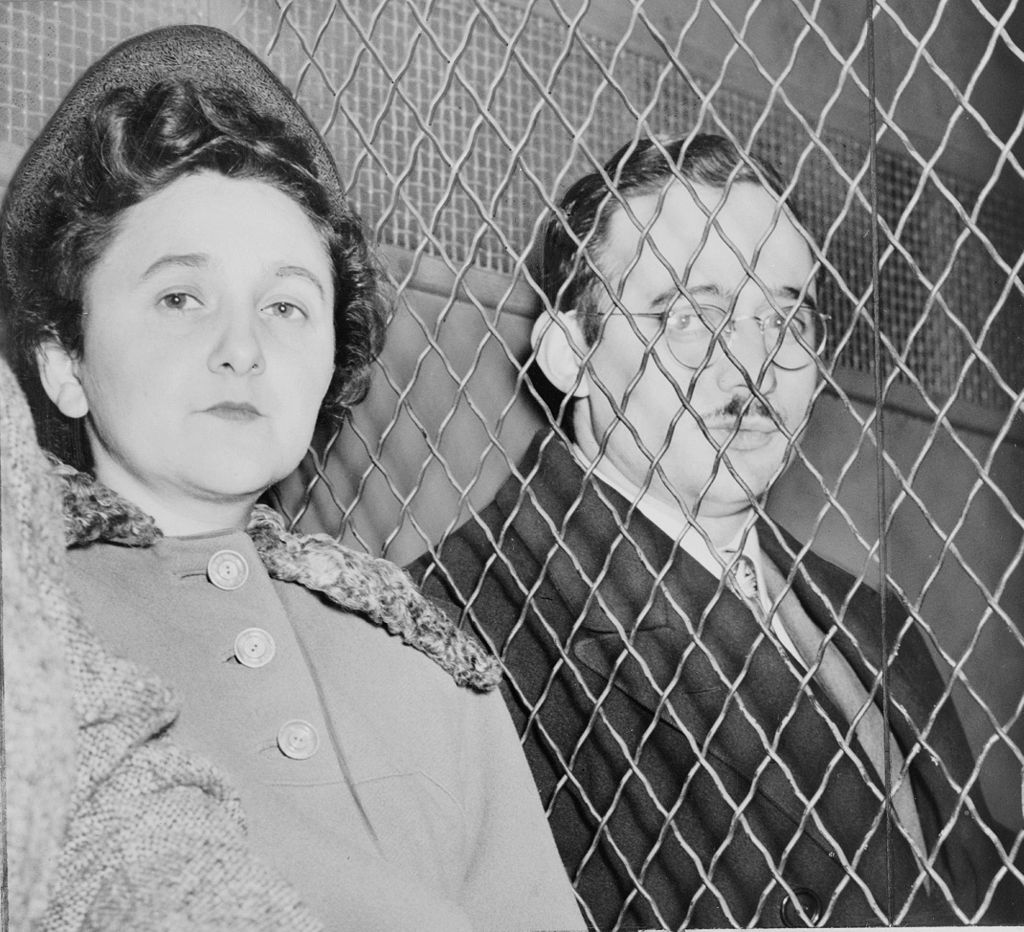
Julius and Ethel Rosenberg: Victims of a Miscarriage of Justice?


Julius and Ethel Rosenberg went to the electric chair on 19th June 1953, having been found guilty of spying for the Soviet Union. But was this sentence a just one?

Nuclear Espionage

During the latter years of World War Two and the ensuing “Cold War”, the United States and the Soviet Union were engaged in a race to develop nuclear weapons. The US clearly won the race in terms of being first to actually deploy a weapon – the bombs that devastated Hiroshima and Nagasaki in 1945 and brought the war against Japan to an end – but that did not stop the Soviet Union from doing everything it could to catch up, including stealing nuclear secrets from wherever it could.

Members of the American Communist Party were recruited who were in a position to obtain the sort of information that would be useful to the Soviet nuclear program. This activity began well before 1945 and continued into the 1950s. The secrets obtained through spying probably took several years off the time needed for the Soviets to perform their first nuclear test, which was in 1949.

A Spy Ring

Julius Rosenberg joined the American Communist Party when he was a student in New York and he married a fellow party member, Ethel Greenglass, in 1939. He joined the US Signal Corps and worked at the Fort Monmouth (NJ) radio research laboratories.

He was approached by Soviet agents and agreed to pass on any useful information that came his way, as well as recruiting a network of fellow spies.

In addition to his wife, her brother David and his wife Ruth were members of the spy ring. At first, their duties were purely administrative as they did not have direct access to classified material.

In 1943 David Greenglass was called up by the US Army and assigned to the nuclear research project at Los Alamos that was part of the Manhattan Project. His spying consisted of making copies of plans that came his way, although just how valuable these documents were to the Soviets is a matter of debate, given that David Greenglass was not a nuclear physicist.

David Greenglass was not the only spy at Los Alamos. An employee named Harry Gold was the link between the information gatherers and Anatoli Yakolev, an agent based at the Soviet Consulate in New York. This route was also used by Klaus Fuchs, a naturalized British citizen who was a nuclear physicist and whose contributions were of much greater value to Yakolev than those of David Greenglass.

Breaking the Ring

The spy ring was discovered in 1950 thanks to British Intelligence which decoded documents implicating Klaus Fuchs as having spied for the Soviet Union during his time at Los Alamos. Fuchs had returned to the UK in 1946 in order to work on the British nuclear weapons program and he had continued his activities in terms of passing material to the Soviet Union. Once Fuchs had confessed to the British secret service the details were passed back to their American counterparts, who up to that point had had no idea that a spy ring had been operating at Los Alamos.

Fuchs named Harry Gold as his former contact, and Gold soon implicated David and Ruth Greenglass. It was David Greenglass who told the FBI that he had been recruited by Julius Rosenberg.

However, when they were arrested the Rosenbergs said absolutely nothing. They neither confessed to being spies nor agreed to implicate anyone else.

The Trial

The trial of the Rosenbergs and other members of the spy ring began in New York on 6th March 1951. This was at the height of the anti-Communist “Red Scare” initiated by Senator Joseph McCarthy and the opportunity was not lost to make an example of some real Communist spies who had been unmasked, as opposed to the many phony cases of supposed “anti-American activities” that McCarthy claimed to have revealed.

During the trial the Rosenbergs clearly came off worst. Their fellow conspirators had no qualms about pointing the finger of blame at them, but they continued their silence and cited the Fifth Amendment to the American Constitution that allowed them not to answer any questions that might have incriminated them.

This silence was probably the reason why they received death sentences as opposed to the prison terms given to the other conspirators. The essence of McCarthyism was that people under suspicion would seek to lessen the consequences to themselves by spreading the net of suspicion to others, and this was what the Rosenbergs refused to do.

The Electric Chair

Julius and Ethel Rosenberg were executed by electrocution at Sing Sing Correctional Facility on 19th June 1953. Julius died after one jolt of electricity but the system did not work as well for Ethel, whose heart was still beating after three shocks had been applied and a further two were needed. It is possible that she experienced considerable pain for at least part of the procedure.

Was Justice Served?

The convictions and executions of the Rosenbergs pose a number of disturbing questions that revolve around the issue of whether or not justice was served.

There can be little doubt that Julius Rosenberg was guilty of the crimes with which he was charged. He was the central pivot around which everything else revolved, having been the recruiter of his wife and the Greenglasses. But was Ethel equally guilty, and was she more guilty than her brother and sister-in-law? That would appear to have been the conclusion of the trial judges given that she received the same sentence as her husband which was far more severe than that of any of the other defendants.

When one looks at what Ethel Rosenberg actually did, the suspicion that a miscarriage of justice took place becomes extremely strong. If she had any role in the business it was no more than that of a secretary who typed the handwritten reports produced by her husband and brother. There was never any suggestion that she actively sought the information that was passed on and she was certainly not the prime mover of the spy ring.

So why was she executed when others, more guilty than she, were not? One reason could be the evidence provided in court by her brother, David Greenglass, who was at the heart of the information gathering at Los Alamos. Evidence was also given against her by her sister-in-law, Ruth Greenglass.

Exactly what was said in court was not known at the time, due to the need to maintain secrecy because of the highly sensitive nature of the evidence, and it was many years later that the trial transcripts became public knowledge.

In 2001 David Greenglass, then aged nearly 80, recanted the evidence he gave in court that sent his sister to the electric chair. His aim had been to save his own skin and that of his wife, who was given immunity from prosecution in exchange for his evidence.

The evidence that Ethel Rosenberg was the group’s secretary, and therefore an important cog in the whole process, was provided by the Greenglasses, and this was the evidence that David Greenglass recanted and admitted had been given falsely under oath. He served a jail sentence of less than ten years, and had to live with the guilt of having – in effect – murdered his sister for the rest of his long life. He died in 2014 at the age of 92.

Victims of National Hysteria?

As mentioned above, the trial of the Rosenbergs took place at the height of the McCarthy era when many people believed that the United States was in very real danger of being subverted by Communism. Many false accusations were thrown around and careers ruined – most notably in Hollywood – when perfectly innocent people were accused of having left-wing sympathies. It is therefore not surprising that a court trying a case of actual espionage involving extremely sensitive material smuggled to the Soviet Union by admitted Communists would want to throw the legal book at the perpetrators.

But why was the death sentence passed on the Rosenbergs? Espionage during wartime is regarded as a capital crime in many jurisdictions around the world, but this is not normally the case when the countries involved are not at war. The beneficiary of the spying in question was the Soviet Union, which was an ally of the United States during World War Two and officially the nations were at peace during what was termed the “Cold War”. Spies are simply not executed by civilized countries under such circumstances.

The answer has to be the McCarthyite hysteria and the fact that the Rosenbergs said nothing at their trial to defend themselves. As a result, they were executed and others – more guilty than themselves in some respects – received relatively light sentences. The accusation that justice was not fairly administered has much to support it.

© John Welford