Followers

Monday, 7 May 2018

The Blind Beggar of Bethnal Green


Bethnal Green’s blind beggar was a legendary character who gave his name to a pub that was to acquire a sinister reputation in more recent times. 


Bethnal Green

Bethnal Green is deep inside London’s “East End”. It is an area that suffered considerable damage during the London blitz of World War Two and the rebuilding was not always done with a lot of sensitivity. It has a very mixed population due to centuries of immigration and is one of Britain’s most ethnically diverse regions.

In the past it was “ruled” by criminal gangs, most notably the Krays and the Richardsons in the 1960s. Bethnal Green after dark was a dangerous place to be. The war between the gangs came to a head in March 1966 when George Cornell, a member of the Richardson gang, was shot and killed by Ronnie Kray in the Blind Beggar pub in Whitechapel Road.

A little further north, just off Roman Road close to where it crosses the Regent’s Canal, is a 1957 bronze statue by Elizabeth Frink entitled “The Blind Beggar and his Dog”.


So who was the Blind Beggar of Bethnal Green?

The story goes back to the 13th century. The beggar was supposed to have lost his sight at the Battle of Evesham in 1265. He had a beautiful daughter called Bessee who was sought after by four suitors, namely a knight, a rich gentleman, an innkeeper’s son and a merchant. Bessee told them that they would have to ask her father for permission to marry her, but when they saw that her father was a beggar in rags, and in no position to bestow any sort of dowry on his daughter, three of them changed their minds.

However, the fourth of the suitors, namely the knight, went ahead with his request and was amazed when the beggar offered him a dowry of £3,000 plus a gift of £100 to pay for his daughter’s wedding dress. At the wedding the beggar threw off his rags and revealed himself to be Henry de Montfort, the son of Simon de Montfort, once the most powerful man in England, who had been killed at the Battle of Evesham. Henry had spent the years since the battle begging in order to raise his daughter’s dowry, which he was now ready to hand over.

The story, first told in the 15th century, has legend written all over it, as the evidence points to Henry having been killed rather than just blinded in the battle. It does, however, have a lesson to teach, namely that blindness is not restricted to those who have lost their sight – the outer aspect of someone is not always the full story. 

No doubt the same could be said today for the whole of Bethnal Green.

© John Welford

Tuesday, 1 May 2018

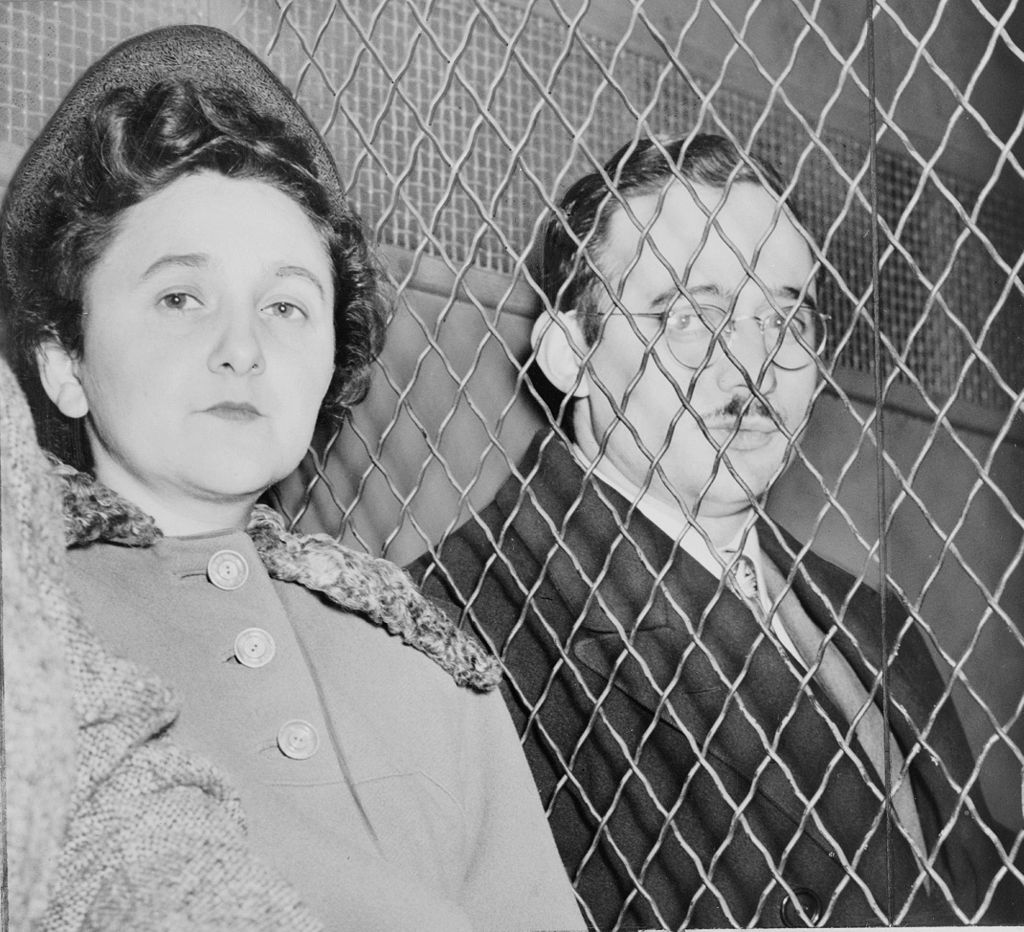
Julius and Ethel Rosenberg: Victims of a Miscarriage of Justice?


Julius and Ethel Rosenberg went to the electric chair on 19th June 1953, having been found guilty of spying for the Soviet Union. But was this sentence a just one?

Nuclear Espionage

During the latter years of World War Two and the ensuing “Cold War”, the United States and the Soviet Union were engaged in a race to develop nuclear weapons. The US clearly won the race in terms of being first to actually deploy a weapon – the bombs that devastated Hiroshima and Nagasaki in 1945 and brought the war against Japan to an end – but that did not stop the Soviet Union from doing everything it could to catch up, including stealing nuclear secrets from wherever it could.

Members of the American Communist Party were recruited who were in a position to obtain the sort of information that would be useful to the Soviet nuclear program. This activity began well before 1945 and continued into the 1950s. The secrets obtained through spying probably took several years off the time needed for the Soviets to perform their first nuclear test, which was in 1949.

A Spy Ring

Julius Rosenberg joined the American Communist Party when he was a student in New York and he married a fellow party member, Ethel Greenglass, in 1939. He joined the US Signal Corps and worked at the Fort Monmouth (NJ) radio research laboratories.

He was approached by Soviet agents and agreed to pass on any useful information that came his way, as well as recruiting a network of fellow spies.

In addition to his wife, her brother David and his wife Ruth were members of the spy ring. At first, their duties were purely administrative as they did not have direct access to classified material.

In 1943 David Greenglass was called up by the US Army and assigned to the nuclear research project at Los Alamos that was part of the Manhattan Project. His spying consisted of making copies of plans that came his way, although just how valuable these documents were to the Soviets is a matter of debate, given that David Greenglass was not a nuclear physicist.

David Greenglass was not the only spy at Los Alamos. An employee named Harry Gold was the link between the information gatherers and Anatoli Yakolev, an agent based at the Soviet Consulate in New York. This route was also used by Klaus Fuchs, a naturalized British citizen who was a nuclear physicist and whose contributions were of much greater value to Yakolev than those of David Greenglass.

Breaking the Ring

The spy ring was discovered in 1950 thanks to British Intelligence which decoded documents implicating Klaus Fuchs as having spied for the Soviet Union during his time at Los Alamos. Fuchs had returned to the UK in 1946 in order to work on the British nuclear weapons program and he had continued his activities in terms of passing material to the Soviet Union. Once Fuchs had confessed to the British secret service the details were passed back to their American counterparts, who up to that point had had no idea that a spy ring had been operating at Los Alamos.

Fuchs named Harry Gold as his former contact, and Gold soon implicated David and Ruth Greenglass. It was David Greenglass who told the FBI that he had been recruited by Julius Rosenberg.

However, when they were arrested the Rosenbergs said absolutely nothing. They neither confessed to being spies nor agreed to implicate anyone else.

The Trial

The trial of the Rosenbergs and other members of the spy ring began in New York on 6th March 1951. This was at the height of the anti-Communist “Red Scare” initiated by Senator Joseph McCarthy and the opportunity was not lost to make an example of some real Communist spies who had been unmasked, as opposed to the many phony cases of supposed “anti-American activities” that McCarthy claimed to have revealed.

During the trial the Rosenbergs clearly came off worst. Their fellow conspirators had no qualms about pointing the finger of blame at them, but they continued their silence and cited the Fifth Amendment to the American Constitution that allowed them not to answer any questions that might have incriminated them.

This silence was probably the reason why they received death sentences as opposed to the prison terms given to the other conspirators. The essence of McCarthyism was that people under suspicion would seek to lessen the consequences to themselves by spreading the net of suspicion to others, and this was what the Rosenbergs refused to do.

The Electric Chair

Julius and Ethel Rosenberg were executed by electrocution at Sing Sing Correctional Facility on 19th June 1953. Julius died after one jolt of electricity but the system did not work as well for Ethel, whose heart was still beating after three shocks had been applied and a further two were needed. It is possible that she experienced considerable pain for at least part of the procedure.

Was Justice Served?

The convictions and executions of the Rosenbergs pose a number of disturbing questions that revolve around the issue of whether or not justice was served.

There can be little doubt that Julius Rosenberg was guilty of the crimes with which he was charged. He was the central pivot around which everything else revolved, having been the recruiter of his wife and the Greenglasses. But was Ethel equally guilty, and was she more guilty than her brother and sister-in-law? That would appear to have been the conclusion of the trial judges given that she received the same sentence as her husband which was far more severe than that of any of the other defendants.

When one looks at what Ethel Rosenberg actually did, the suspicion that a miscarriage of justice took place becomes extremely strong. If she had any role in the business it was no more than that of a secretary who typed the handwritten reports produced by her husband and brother. There was never any suggestion that she actively sought the information that was passed on and she was certainly not the prime mover of the spy ring.

So why was she executed when others, more guilty than she, were not? One reason could be the evidence provided in court by her brother, David Greenglass, who was at the heart of the information gathering at Los Alamos. Evidence was also given against her by her sister-in-law, Ruth Greenglass.

Exactly what was said in court was not known at the time, due to the need to maintain secrecy because of the highly sensitive nature of the evidence, and it was many years later that the trial transcripts became public knowledge.

In 2001 David Greenglass, then aged nearly 80, recanted the evidence he gave in court that sent his sister to the electric chair. His aim had been to save his own skin and that of his wife, who was given immunity from prosecution in exchange for his evidence.

The evidence that Ethel Rosenberg was the group’s secretary, and therefore an important cog in the whole process, was provided by the Greenglasses, and this was the evidence that David Greenglass recanted and admitted had been given falsely under oath. He served a jail sentence of less than ten years, and had to live with the guilt of having – in effect – murdered his sister for the rest of his long life. He died in 2014 at the age of 92.

Victims of National Hysteria?

As mentioned above, the trial of the Rosenbergs took place at the height of the McCarthy era when many people believed that the United States was in very real danger of being subverted by Communism. Many false accusations were thrown around and careers ruined – most notably in Hollywood – when perfectly innocent people were accused of having left-wing sympathies. It is therefore not surprising that a court trying a case of actual espionage involving extremely sensitive material smuggled to the Soviet Union by admitted Communists would want to throw the legal book at the perpetrators.

But why was the death sentence passed on the Rosenbergs? Espionage during wartime is regarded as a capital crime in many jurisdictions around the world, but this is not normally the case when the countries involved are not at war. The beneficiary of the spying in question was the Soviet Union, which was an ally of the United States during World War Two and officially the nations were at peace during what was termed the “Cold War”. Spies are simply not executed by civilized countries under such circumstances.

The answer has to be the McCarthyite hysteria and the fact that the Rosenbergs said nothing at their trial to defend themselves. As a result, they were executed and others – more guilty than themselves in some respects – received relatively light sentences. The accusation that justice was not fairly administered has much to support it.

© John Welford

Jacques Benveniste: Double Ig Nobel Prizewinner

Jacques Benveniste

Jacques Benveniste, born in Paris in 1935, had what might be regarded as a conventional career as a medical scientist. He specialized in immunology and became head of a department devoted to that discipline at Inserm, which is the French National Institute of Health and Medical Research.

In 1979 he published an important and well-received paper on PAF (Platelet-Activating Factor), and he is widely regarded as having been the scientist responsible for the discovery of this important element in understanding how heart disease and strokes can occur. The name Jacques Benveniste is, therefore, one that carries considerable respect in the world of immunology.

One aspect of his research involved the messenger function of PAF – the mechanism by which cells communicate with each other - and this was the subject of his 1979 paper. However, he then went on to develop this idea in a direction that takes us from the realm of science to something completely different!

A Concept in Homeopathy


Many people sincerely believe that homeopathy is a legitimate means of curing a wide range of diseases, but just about anyone who knows the first thing about medicine takes a very different view. It is based on the ancient idea that if something – such as a poison – does you harm, then the way to reverse the harm is to take even more of the same thing, but in a very dilute form.
The dilution is key to the cure – the greater the dilution, the better the chance of a cure. This may sound absolutely crazy – mainly because it is – but that is the principle at the heart of homeopathy, and many people take it very seriously.
You may ask, with some justification, how an extremely dilute solution can have the remotest effect on a patient, given that they are drinking almost pure water, but the homeopaths have an answer to this problem. This is that “water has memory”. The notion is that if a molecule of water has had contact with a molecule of something other than water, then it will “remember” this fact and pass on the message to every other water molecule with which it has contact.
Clearly, according to the homeopaths, the more water molecules there are with which the messengers can have contact, the better. That is why a highly dilute solution is more effective that a less dilute one – the patient has a much greater chance of ingesting molecules that have “got the message” if the message has been passed on as many times as possible.
However, the problem remains as to how these messages can be communicated in the first place, and that is where Jacques Benveniste comes into the picture.

Jacques Benveniste's Experiment

Jacques Benveniste spent a considerable amount of time pouring water into and out of laboratory flasks, into which he had originally placed a small quantity of a chemical. He measured the amount of chemical in the flask each time the water was poured out and decided that there was always a “memory” of the chemical in the water, no matter how many times he had – in effect – rinsed out the flask. It was, therefore, possible to detect which of two flasks had originally contained the chemical – when one had and the other had not – simply from analyzing the water in the flasks after many rinsings out.
Jacques Benveniste published his findings in the highly prestigious journal Nature in 1998 and excited considerable interest in what appeared to be an impossible claim. Needless to say, other researchers tried to repeat the experiment, which did not require a huge amount of expensive equipment, but with very limited success. The only people who said that Benveniste was correct were already devotees of homeopathy who were delighted to have confirmation from a reputable scientist that they had been right all along.

The Next Stage

Having – as he thought – produced convincing proof of the memory-retaining capacity of water, Jacques Benveniste thought he saw a way of cashing in on his work. He left Inserm (it is possible that he was pushed out rather than resigning his post voluntarily) and founded a company named the Digital Biology Laboratory, through which he hoped a make a vast fortune by completely revolutionizing the world of medicine.
His new idea was that the memory retained by a quantity of water could be digitized and then transmitted to another body of water via a telephone line or the Internet. If one assumed that the first flask of water contained the cure to a particular ailment – which might well be assumed by a convinced homeopath – then the digitized memory of that cure could be sent anywhere in the world and transfer its miraculous powers to patients who would only need a glass of water and a computer (these days, a smartphone would probably have been sufficient). Presumably, a certain amount of money would also have flowed into the coffers of the Digital Biology Laboratory.
Jacques Benveniste was again keen to publish his findings, but he found little support for his views in the scientific community, for reasons that are entirely understandable.

Ig Nobel Prizes

However, Jacques Benveniste’s efforts did not escape the notice of the Ig Nobel Board of Governors, who award ten “prizes” every year to people whose efforts in the spheres of science, medicine, literature, economics, peace, and other fields, have attracted attention for being trivial, wacky, a waste of time, or just plain ridiculous.
Ig Nobel prizes have been awarded every year since 1991, with the winners being invited to a ceremony at Harvard University at which the awards are presented by genuine Nobel Laureates. Some Ig Nobel prizewinners with a sense of humor actually turn up in person, whereas others take offense or are far too embarrassed to risk being seen in public.
Jacques Benveniste had the unique honor of winning two Ig Nobels, the first being in 1991. This was the first such award in the field of Chemistry. However, his persistence in continuing to astonish the scientific world earned him a second Ig Nobel, in 1998. He did not collect either award in person, but said that he was happy to be recognized in this way because it proved that the people making the awards did not understand the first thing about anything.
Unfortunately, there was no possibility of Jacques Benveniste ever collecting a third Ig Nobel because he died in 2004 at the age of 69, with his revolutionary claims still unproven.

© John Welford

Monday, 30 April 2018

Bernard Montgomery: An Insufferable Field Marshal


There can be no doubt that Field Marshal Bernard Law Montgomery (1887-1976) was one of Britain’s greatest ever military commanders, but it is also beyond dispute that he was one of the most difficult people to work with, a view that was certainly held by his American counterparts during World War II, namely George Patton and Dwight D Eisenhower. Montgomery described himself as being “tiresome” and the epithet seems entirely apt.


Before World War II

Montgomery did not come from a typical British officer class background, being the son of an Anglican bishop who was reasonably well-off but by no means rich. At Sandhurst (the Royal Military Academy) Montgomery was the “odd one out”, especially as he was not afraid of questioning opinions with which he did not agree. Being both middle-class and independent-minded were not the best qualities for a career as an officer in the British army prior to World War I.

During the 1914-18 war, Montgomery served with distinction and was lucky to escape with his life after being shot in the chest by a sniper.

Between the wars he attended the Army’s Staff College at Camberley, firstly as a pupil and later as a teacher of army tactics. He used this pause from active service to very good effect, as he had been horrified by the tactics that had been practiced during World War I and was convinced that there had to be a better way of fighting wars in the 20th century. In particular, he deplored the “gung-ho” tactic of attacking en masse with a superior force that was bound to suffer a high casualty rate even if it won the encounter. Instead, he preferred to reconnoitre the enemy and identify his weaknesses before attacking where he was most vulnerable.


Egypt and El Alamein


In August 1942 Lieutenant General Montgomery was sent to Egypt to take command of the British Eighth Army, which was threatened by the progress of Rommel’s Afrika Corps as it advanced across North Africa. Montgomery did two things that were different from what had gone before. He coordinated the forces under his command, namely those on the ground and in the air, and he made himself known among his troops, which boosted their morale and led to them being intensely loyal to him. He knew that soldiers who trusted their commanders were far more likely to be victorious, and regarded high troop morale as “the most important single factor in war”.

On one occasion he was about to step into a tank when a soldier suggested that his broad-brimmed hat would get caught on the hatch and offered him a standard black beret in its place. Montgomery was for ever after proud to wear a soldier’s beret, on which he placed the badge of the Royal Tank Regiment alongside his officer’s badge.

The victory of the Eighth Army (together with the Australian 9th Division) at El Alamein was largely due to Montgomery’s superior tactics and his use of military intelligence (including decrypted German radio transmissions) to second-guess his opponent. He also tried to work out what Rommel’s tactics would be by understanding how the German commander’s mind worked. His ability to get inside the head of his opponent was one of Montgomery’s greatest strengths.

However, it has to be admitted that this victory, which many people (including Churchill) came to regard as the turning point in the War, went somewhat to Montgomery’s head, as he came to believe that only he had the right ideas about how the campaign should proceed from that point. In particular he had a low opinion of the efforts made by the American forces under George Patton, whom he despised and mistrusted (the feelings were entirely mutual on Patton’s part).


The Italian Campaign


The next phase of the war was the invasion of Sicily, as the first step of the long Italian campaign. This was to be an allied attack, involving both British and American forces, but Montgomery was keen to ensure that the main credit for victory would go to him. Patton, for his part, had little time for Montgomery, whom he regarded as being arrogant, brusque and standoffish, and in this assessment he was not wrong. Patton could also not stand Montgomery’s tactic of meticulously planning every move, at one point calling him a “timid little fart”.

When the Americans captured Palermo, which Montgomery had wanted to do, the latter was highly annoyed. He agreed to meet Patton at Palermo and Montgomery planned to fly there in an American Flying Fortress that he had won in a bet. Patton gave an evasive answer when Montgomery asked if the runway at Palermo would be long enough to land such a plane and it turned out that it was not. Montgomery was lucky to escape unscathed when the Fortress ran off the runway and was wrecked. He had no doubt who to blame for this incident.


The Invasion of Europe


During the invasion of mainland Europe that started with the D-Day landings in June 1944, Montgomery was again conscious of the need to be one step ahead of the Americans. Montgomery most resented the fact that Eisenhower was the Allied Supreme Commander and therefore his boss. Montgomery had been promoted to the rank of Field Marshal, which was not a rank used in the American army, and Montgomery assumed that this gave him overall permanent command of the ground forces in Europe, both British and American, which had been the case only on a temporary basis when the invasion was being launched.

Relationships between the two men continued to be fraught, with Eisenhower on several occasions having to appease Montgomery by letting him have his way in tactical matters. Sometimes this was a wise move, but not always.

For example, Patton wanted to advance against Germany via a southern route whereas Montgomery preferred a northern approach through the Netherlands. Eisenhower gave in to Montgomery, but the resulting campaign (Operation Market Garden) was, for once in Montgomery’s glittering career, a dismal failure.

As it happened, the Germans made things much easier for the allies by attempting a counter-attack through the Ardennes Forest not far from where the bulk of the American forces under Patton were stationed. The Americans turned the situation to their advantage and forced the Germans back. However, Montgomery was later to claim far more credit for this victory than he was entitled to do, British forces having only played a minor part in the Ardennes campaign. Not surprisingly, this attitude infuriated the Americans.

Montgomery now wished to claim the ultimate accolade of capturing Berlin itself, as did Patton, but Eisenhower decided that it would be politically expedient for that honour to fall to the Soviet forces that were advancing from the East. No doubt he reckoned that for either man to have been able to claim that particular credit would have made them even more insufferable than they already were.


After the War


Patton died after a road traffic accident in Germany not long after the war ended, but Montgomery lived on into old age, dying in 1976 at the age of 88. His post-war work included helping to create NATO, the North Atlantic Treaty Organization that has done much to preserve peace in Europe and the wider world.

“Monty” never lost his popularity with the British people, and made a number of appearances in television documentaries (etc) in his later years, in which he was always keen to praise the bravery and devotion of the troops under his command while also making sure that credit went where it was due.

Bernard Montgomery had a remarkable talent for winning battles and planning campaigns, but along with that went the character flaws that made him a very difficult person to get along with, especially with regard to the military and political hierarchy. Winston Churchill, who had to be persuaded to appoint Montgomery to command of the Eighth Army prior to El Alamein, was famously quoted as saying of him: “In defeat, unbeatable; in victory, unbearable.”


© John Welford


Friday, 27 April 2018

Ndabaningi Sithole: one of the fathers of Zimbabwean independence


Men of the cloth do not often feature in struggles for black liberation or emancipation, although notable examples were Dr Martin Luther King and Rev Jesse Jackson in the United States. In Zimbabwe, Ndabaningi Sithole was such a man. A gifted orator, Ndabaningi Sithole was the brains behind the foundation of the Zimbabwe African National Union (ZANU) in 1963.
He was born on 21st July 1920 in the village of Nyamandlovu in Matabeleland (western Zimbabwe), but he was an Ndau by descent, the Ndau being one of the minority ethnic groups in Zimbabwe, found mostly to the south-east of the country. His early years were not easy because his father distrusted education and would not support his son’s endeavours to gain a good educational grounding. Blessed with immense intellectual abilities, young Ndabaningi defied his father and started to pursue his education through missionary schools just as most Zimbabwean revolutionaries did. He attended Dadaya School under the tutelage of Garfield Todd, a white New Zealander who was to become Prime Minister of Southern Rhodesia from 1953 to 1958. 
His determination to be educated led to him gaining a National Junior Certificate and eventually a BA degree from the University of South Africa by private study. He returned to Dadaya School as a teacher, and in 1947 led a short protest strike in support of several girl students whom he believed had been punished in a degrading manner by Garfield Todd.
Sithole became a Christian and was uncertain for some time whether to pursue a career as a teacher or in the Church. In 1953 he was accepted by the American Board Mission and spent three years in the United States before returning to Rhodesia to become head of a primary school and to be ordained as a Methodist minister. His interest in politics arose when he became president of the African Teachers Association and wrote a short book with the title “African Nationalism”, which was published in 1959. Although he advocated a moderate and peaceful approach to reform, such views were dangerous in a country that was governed by the minority white population.
He soon realised that politics were his vocation and joined the National Democratic Party, led by Joshua Nkomo, in 1960. He soon reached a position of influence within the party and was forced to resign his teaching post, becoming a full-time time politician from that point on. The Government’s response to black nationalism was to become more authoritarian, proscribing the NDP as a criminal organisation in December 1962, but a new organization, the Zimbabwe African Peoples Union (ZAPU) was declared very soon afterwards.
However, all was not well in the leadership of ZAPU, and Sithole and others split from Nkomo in July 1963. The new party was called the Zimbabwe African National Union (ZANU), its leaders including, besides Sithole, Herbert Chitepo, Robert Mugabe, Edgar Tekere and Enos Nkala. In 1964 both ZANU and ZAPU were banned and many nationalists, including Sithole, were placed in detention camps. Sithole was detained for five years, after which he was arrested on a charge of plotting to assassinate the Prime Minister, Ian Smith, and sentenced to six years in jail. The evidence rested on a letter that Sithole was supposed to have written, but he always maintained that it was a forgery, stating at his trial: “I wish publicly to dissociate my name in thought, word and deed from any subversive activities, from any terrorist activities, and from any form of violence.”
On his release in 1974, Sithole lived in exile in Zambia with other ZANU leaders, one of whom, Herbert Chitepo, was killed by a car bomb in March 1975, an occurrence that led to the emergence of Robert Mugabe as the leader of ZANU with a more militant approach than that advocated by Sithole. Even before this event, Sithole had lost a vote of no confidence in his leadership, but Mugabe was still in prison at the time. ZANU split along tribal lines, with the Ndebele joining Sithole in ZANU-Ndonga and the Shona following Mugabe in his ZANU-PF (Patriotic Front).
Sithole’s moderate approach led to him being part of the four-man executive council to govern “Zimbabwe Rhodesia” under the “Internal Settlement” of 1978, in conjunction with Ian Smith, Bishop Abel Muzorewa and Chief Jeremiah Chirau. He also took part in the Lancaster House Agreement of December 1979 that was designed to reach a settlement for black majority rule that would be agreed by all the parties and recognised internationally. 
However, the militants in ZANU and ZAPU, who had been engaged in guerrilla-war tactics against the Smith government, were distrustful of Sithole for his presumed sell-out to the whites, and, although Mugabe had signed the Agreement, the solution was clearly not to his liking, involving as it did a guaranteed presence of white members in the new Parliament. Having failed to win a seat in the Parliament elected in 1980, and fearing for his life, Sithole left for the United States in 1983, where he stayed until 1992. 
At the age of 75 he attempted a political comeback by being elected to the Zimbabwe Parliament in 1995. The following year he stood against Mugabe in the election for president, but only gained 37,000 votes as against the 1.4 million won by Mugabe. However, he had withdrawn from the election before polling took place, his name remaining on the ballot, because he claimed that the election was being unfairly managed. Accusations of election rigging have been levelled at Robert Mugabe ever since, and with good reason. 
In 1997 Sithole was arrested, tried and convicted on a charge of attempting to assassinate Robert Mugabe, and he was also ejected from his parliamentary seat. As his appeal was never heard, it must remain technically uncertain whether there was any truth in the allegation, although the likelihood of the charge being entirely fictitious must be high, given the characters of the people involved. 
In June 2000, Sithole’s ZANU-Ndonga won his seat yet again. However, by this time Sithole himself was seriously ill and he left Zimbabwe for medical treatment soon afterwards. He died in hospital in Pennsylvania on 12 December 2000 at the age of 80.
Ndabaningi Sithole will always be seen as an important figure in the history of Zimbabwe’s liberation struggle. Had he been able to prevail against the stronger and less principled Robert Mugabe, there is every possibility that much of the misery suffered by the people of Zimbabwe in more recent years might have been avoided.

© John Welford

Monday, 2 April 2018

Mary Seacole: the forgotten "Florence Nightingale"


Mary Seacole is now being given proper recognition for her contribution to nursing and the welfare of soldiers during the Crimean War. Everyone has heard of Florence Nightingale, the "lady with the lamp", but nothing like as much fame has fallen on the shoulders of Mary Seacole, although this oversight is at last being corrected.

Mary Seacole – her early life

Mary was born in 1805 as Mary Jane Grant, in Kingston, Jamaica. Her father was a Scottish soldier, and her mixed-race mother ran a boarding house for British army officers. This lady had a smattering of nursing knowledge, as well as being well versed in the use of herbal medicines, skills which she passed on to her daughter.

Little is known of Mary's early life, although she visited London in the 1820s, and in 1836 she was married to Edwin Horatio Seacole, one of her mother's house-guests, but he died within a few years.

Mary ran the boarding house with her sister for some time, and also practised as a nurse, both in Jamaica and Panama, where she went to help her brother in running his hotel there.

The Crimean War

In 1854 the Crimean War broke out, with Britain and France in conflict with Russia, most of the hostilities being carried out near the shores of the Black Sea. The miseries suffered by the troops were partly the result of incompetence on the part of the generals and politicians, and partly due to the remoteness from Britain of the theatre of war. This was the first time that the British army had been called upon to fight so far from home or friendly territory.

Mary Seacole sailed to Britain with the intention of volunteering for Florence Nightingale's nursing corps. Whether it was the colour of her skin or her lowly social status that was the issue is a matter for debate, but the fact remains that her office of service was turned down.

Undaunted, she set sail for the Crimea at her own expense, arriving at Balaclava in February 1855. With a business partner, she did exactly what she had done back in Jamaica, and opened a boarding house that acquired the name "The British Hotel". From this base she offered a range of comforts for the troops, both officers and serving men.

Being independent, and not constrained by the authority of Florence Nightingale's official nursing corps, she was free to roam almost as widely as she wanted, and she became a familiar sight as she moved among the fighting men with her mules, taking them food, wine and medical supplies. She clearly did this work at considerable physical risk to herself, as she tended the wounded and dying while the fighting was still in progress.

On 9th September she obtained permission to accompany the army as it took control of Sebastopol, and was the first woman to enter the city.

After the War

In 1856 the war ended, leaving Mary Seacole with no customers at the British Hotel, but plenty of unsold stock and unpaid bills. She therefore returned to Britain in financial difficulties, especially as her venture to open an establishment at Aldershot, where much of the British army was based, came to nothing.

The Crimean War produced several remarkable people, one of them being William Howard Russell of The Times, who could claim to be the world's first modern war reporter (it was his account of the Charge of the Light Brigade that brought the true horror home to the British public). Russell was fully aware of Mary Seacole's activities in the Crimea, and his reports helped to win support for her financially. Queen Victoria came to know of her deeds, and gave her blessing to a "Seacole Fund" that recognised Mary's achievements and gave her some financial stability in her later years.

She was prompted to tell her own story, which she did in an autobiography entitled "The Wonderful Adventures of Mrs Seacole in Many Lands", which became something of a bestseller.

She died in 1881, in London, at the age of 76. However, after her death she faded from public memory and it is only in relatively recent times that her contributions to nursing and field care have been given their proper due.

In 2004, she was voted in an online poll as the greatest ever black Briton.

Following a 12-year fundraising campaign, in June 2016 a statue of Mary Seacole by Martin Jennings was unveiled in the grounds of St Thomas’s Hospital in London, looking over the Thames towards the Houses of Parliament. This is the first statue ever erected in the UK in honour of a black woman.

© John Welford