Followers

Tuesday, 20 March 2018

Mary Rose: the woman who got her way with King Henry VIII


The name Mary Rose brings to most minds (British ones at least) the famous warship that belonged to King Henry VIII’s navy and was so badly designed that when fully laden with cannons it flipped over and sank in the Solent, only to be recovered from the sea bed in 1982. Less well known is the person after whom the ship was named.

Mary Rose Tudor was the younger of King Henry’s two sisters. She was born in March 1496 and was therefore five years younger than Henry. She was given an excellent education and grew up to be strikingly attractive. Not surprisingly, given her status after her brother became King in 1509, she was much sought after as a bride who would be able to cement an international alliance.

She must have known that she would not have much choice in the matter, and that politics would be the sole factor that would determine her future. However, the husband that her brother chose for her, when she was aged 19, was not someone that she would have chosen in a million years, had she been allowed a choice.

This was the twice-widowed King of France, Louis XII, who was 52 years old and in very poor physical condition. He suffered from painful gout, had terrible skin, and quite possibly had a sexually transmitted disease. He was hardly love’s young dream as a marriage prospect.

But on the other hand, he was the King of France, Europe’s richest country at the time, and his wife would be guaranteed every luxury as Queen. Mary Rose also knew that Louis was not a bad man in terms of his general behaviour and – more to the point – that his life expectancy could not be all that great.

So she agreed to the plan, on one condition – that she would be free to choose her own husband when her stint as Queen of France was over. Henry agreed, but he could not have foreseen that he would be forced to carry out the terms of his promise as soon as was actually the case.

Mary Rose became a widow only 82 days after her wedding day, and she soon made clear her intention to marry a non-royal, namely Charles Brandon, the Duke of Suffolk. Henry was not happy about this, but he had made his sister a promise and there was no way he could back out of it – especially given the fact that Mary Rose was a typical Tudor woman who was every bit as strong-willed as any Tudor man.

Mary Rose therefore retired from royal duties to live the life of a Suffolk countrywoman with the man she loved. She had three children who survived infancy, with one of her daughters growing up to become the mother of Lady Jane Grey, the “Nine Days Queen”, but that’s another story.

The only sad aspect of Mary Rose’s life, apart from the fate of the ship named after her, was that she only lived to the age of 37, possibly succumbing to cancer.

© John Welford

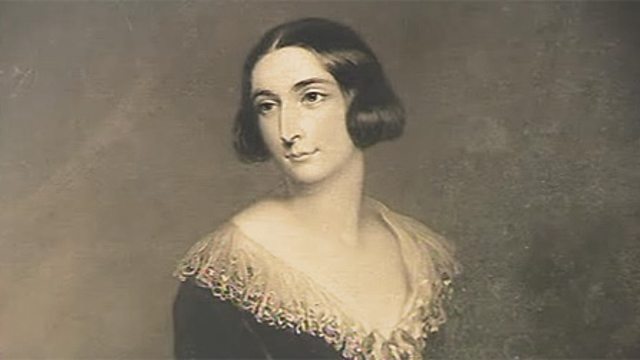
Lady Charlotte Guest


The role of upper-class ladies in Victorian times was to make a good marriage and be the mother of another generation of aristocratic empire-builders. If they chose to indulge in genteel pursuits such as being a patroness of the arts, that was entirely up to them, as long as they did not interfere too much in what their menfolk were up to.

There were, however, some notable exceptions to this format, and Lady Charlotte Guest was one of these, although her name is not one that comes readily to mind in this context. Her accomplishments were modest by comparison to those of Florence Nightingale or Emmeline Pankhurst, for example.

Charlotte Bertie was born at Uffington, Lincolnshire, in 1812, her father being the 9th Earl of Lindsey, who died when Charlotte was six. Her mother remarried, and Charlotte’s stepfather – a clergyman – disapproved of the notion that girls should be educated beyond the basics.

Charlotte was made of sterner stuff and educated herself, not only in the classics but in a variety of languages that included Hebrew, Persian and Welsh.

She did what was expected of her in terms of marrying when young (in 1833), her husband being a Welsh industrialist, Josiah John Guest, who was created a baronet in 1838, thus giving Charlotte the courtesy title of “Lady”. She also became a dutiful mother, giving birth to ten healthy children including four sons who became noted politicians in the Edwardian era.

However, her interest in the Welsh language led to her translation and editing of a collection of 14th-century Celtic tales known as the Mabinogion, which are the earliest prose stories in British literature. The first part of the translation (published as a dual text in both Welsh and English) appeared in 1838, and the seventh and final part in 1845. The importance of the translation was that it brought to public attention the existence of stories from Britain’s Celtic past, which included several legends relating to King Arthur.

Josiah Guest died in 1852, at which point Charlotte revealed another side to her character, which was the ability to do what only men were supposed to be able to do, namely run a company. She took over the management of the Dowlais Ironworks, which would eventually become part of a large industrial complex that survives to this day (GKN – Guest, Keen and Nettlefolds).

This was clearly not what Charlotte really wanted to do, and she was happy to give up being a businesswoman in 1855 when she remarried, her second husband being Charles Schreiber who had been her eldest son’s tutor. She then spent the rest of her life travelling and assembling an impressive collection of ceramics.

Lady Charlotte Guest died in 1895 at Canford Manor, near Poole, which had been built by her first husband and inherited by her eldest son who was created Baron Wimborne in 1880. The house is now Canford School.

© John Welford

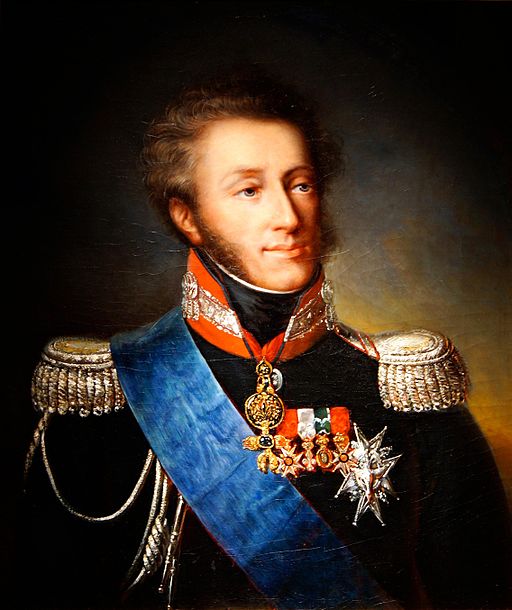
King Louis XIX, the holder of a remarkable record


When Andy Warhol spoke about everyone having 15 minutes of fame, he might have had King Louis XIX of France in mind, seeing that his “reign” in 1830 lasted for just about that length of time (to be absolutely accurate it was more like 20 minutes, although it is unlikely that anyone was standing by with a stopwatch at the time!)

Not surprisingly, not many people have heard of Louis XIX. Indeed, many people might think that the long line of Bourbon Louis’s ended in 1793 when Louis XVI lost his head during the French Revolution. However, there was Louis XVII, the son of Louis XVI, who died in prison at the age of 10, and Louis XVIII, the brother of Louis XVI, who was restored to the French throne on the overthrow of Napoleon Bonaparte. But Louis XIX?

When Louis XVIII died in 1824 he was succeeded by his younger brother, who reigned as Charles X. Charles attempted to restore the monarchy to what it had been before the Revolution, and this led to a second Revolution in July 1830. Charles was luckier than his eldest brother in that he only lost his throne, not his head, and he abdicated in favour of his grandson, who was to reign only very briefly as Henri V.

However, although the father of Henri had died (murdered) back in 1820, Charles had a son who was still alive, namely his elder son Louis, who had supported his father loyally throughout his reign. On 2nd August 1830 Charles signed the abdication document, and the moment his name was on the paper, the royal baton passed to his successor, namely Louis.

The revolutionaries had demanded that Charles abdicate on behalf of himself and his immediate family, thus excluding Louis, but Louis was also required to sign. He hesitated to so do, and for 20 minutes he listened to the entreaties of his wife, who was now technically the Queen of France and rather liked the idea. However, with the whole of France against him, Louis had no choice but to sign and so ended the shortest royal reign ever recorded, anywhere.

The next reign, that of Henri V, did not last a great deal longer, as seven days later the National Assembly declared in favour of the Duke of Orleans who, although a member of the House of Bourbon, had supported the 1789 Revolution and was prepared to rule as a constitutional monarch (King Louis Philippe).

Louis XIX left France for ever and died in Austria in 1844 at the age of 69. For the rest of his life there were a number of ultra-Royalists, known as “Legitimists”, who continued to regard him as the true King of France, but he took no active steps to regain the throne, and therefore goes down as one of the more bizarre footnotes of history.


© John Welford

Monday, 19 March 2018

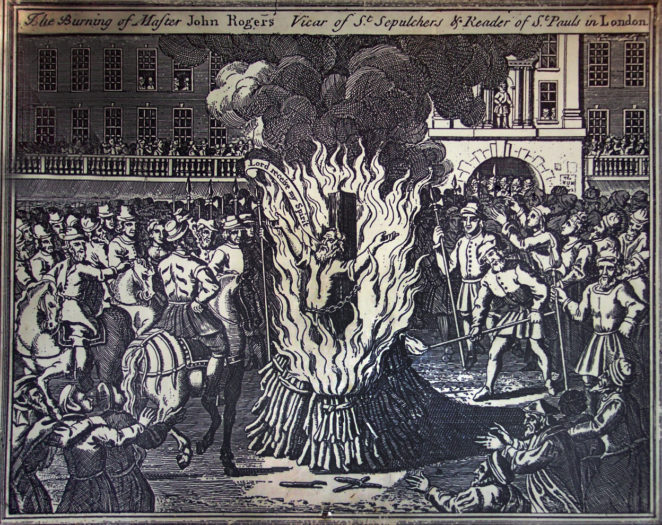
John Rogers: the first Protestant victim of Bloody Mary


John Rogers’s claim to fame is that he was the first victim of Queen Mary I’s campaign against Protestants.

The break from Rome that was launched by King Henry VIII when he divorced Katherine of Aragon in 1533 did not result in a huge change in the way religion was practiced in England – at least, not until Henry died and he was succeeded by his son, King Edward VI. Protestantism then got going in no uncertain way, and John Rogers was one of many preachers who spoke out openly against “pestilent popery, idolatry and superstition”.

John Rogers had been educated at Cambridge University and was a friend of William Tyndale, who had translated the Bible into English but been executed in Belgium in 1536. Rogers was himself an editor of what became known as the “Matthew Bible”.

Edward’s reign was short – he died at the age of 15 in 1553 – and he was succeeded by his sister Mary, who was the Catholic daughter of Catherine of Aragon. Mary promptly did everything she could to reverse the English Reformation and turn the country back to Roman Catholicism.

For many people, this was a welcome move. Protestantism had turned out to be far less colourful and dramatic than what had preceded it. For example, it has been estimated that more than 90% of the artworks in England – most of which had decorated its churches – were destroyed during the early years of the Reformation. Ordinary people were far less interested in theology than in having their drab lives enlivened by the “bells and smells” of Sunday worship.

This was also true of many clergymen, who were perfectly content to convert back to Catholicism once Mary arrived on the throne.

It was not true, however, of a die-hard group of Protestants of whom John Rogers was one. He continued to preach against “popery” and was arrested after he destroyed an image of a saint in a parish church.

His arrest took place in January 1554 and he was given several opportunities to “revoke his abominable doctrine”, which he steadfastly refused to do. On being condemned to death he stated “that which I have preached I will seal with my blood”.

His execution took place at Smithfield on 4th February 1555. He was burned to death in front of a large crowd, which included his wife and 11 children.

His was only the first of many such executions that would took place during the reign of “Bloody Mary”. There would be nearly 300 more during the next three years, to be followed by persecutions of Catholics when Mary’s Protestant sister Elizabeth succeeded her in 1558.

England’s religious turmoil would make many victims out of people who refused to change their beliefs.

© John Welford

Sunday, 18 March 2018

His name is mud: the origin of the phrase


When we say that somebody’s name is “mud” we mean that he or she is completely out of favour for one reason or another. On the face of it, that sounds like a perfectly reasonable word to use, given that mud is that nasty, sticky or slippery stuff that we don’t like treading in if we can avoid it.

However, the term has a much more interesting derivation, concerning a tale of a miscarriage of justice and a name that just happened to fit the use to which it was put.

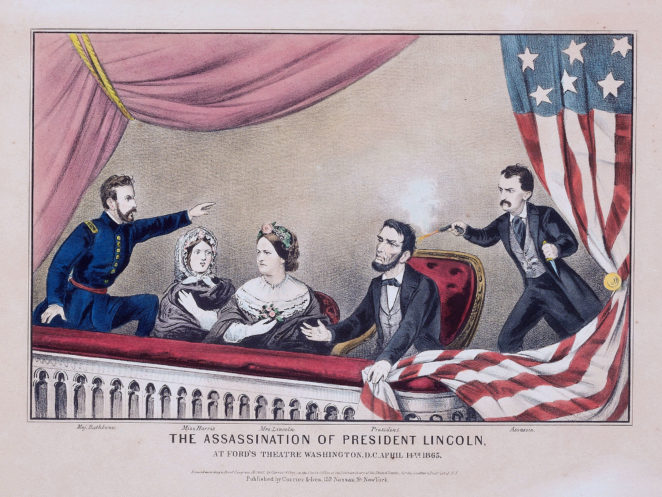
The story begins with the assassination of President Abraham Lincoln in a box at Ford’s Theatre in Washington DC on 14th April 1865. His assassin, John Wilkes Booth, fired the fatal shot then jumped down on to the stage of the theatre. This proved to be too great a height for safety, because Booth broke his leg when he landed and it was only with some difficulty that he was able to leave the theatre, mount his horse and escape.

Once safely outside Washington, Booth found a doctor to treat his injury. This was Dr Samuel Mudd, who did what he was asked, after which Booth rode away.

Dr Mudd only realized who his patient had been when news of the assassination reached everyone the following day. He promptly informed the authorities that he had seen and treated the assassin, but the response he got was far from what he expected. Instead of being thanked for providing valuable information, he was arrested and charged for apparently being a friend of Booth and part of a conspiracy to kill the President.

Giving aid to the man who killed Abraham Lincoln was reckoned by the general public, and the court that tried Dr Mudd, as being a heinous crime that deserved a heavy punishment, and a sentence of life imprisonment was what he got, despite his claim that he had no idea who Booth was at the time he had treated his injury.

It was not until 1869 that Dr Mudd was pardoned and released from jail, but there were still plenty of people who did not believe his protestations of innocence. His name therefore continued to be “mud” for the rest of his life, and “mud” has stuck to many other people in later years whose reputation has been seriously tarnished.

© John Welford

Gruoch, Queen of the Scots


The name Gruoch may not mean much to you, but you may well recognize the title she gained through her second marriage. There is absolutely no reason to believe what you may have heard about her subsequent reputation, though!

Gruoch was a granddaughter of Cinead III, who was King of the Scots from 997 to his death in 1005. She was married to Gille Comgain, Mormaer (Earl) of Moray, who died in 1032. She then married Gille Comgain’s cousin, and it is at this point that pennies start to drop and recognition dawns, because the cousin’s name was Macbeth!

It was through Gruoch that the Moray dynasty inherited both a claim to the kingship and a role in the long-standing feud between rival branches of the Scottish royal house to control the kingdom. Macbeth won that struggle and ruled Scotland from 1040 until his death in battle in 1057.

But was Gruoch, as Lady Macbeth, really the ruthlessly ambitious woman who pushed her husband into committing a series of murders to gain and retain the Scottish crown? That part of the story would appear to have come from the fertile brain of a certain William Shakespeare – but it’s a darned good story nonetheless!

© John Welford

Wednesday, 14 March 2018

And What Rough Beast? A possible link between Yeats and Lenin


“And what rough beast, its hour come round at last, slouches towards Bethlehem to be born?”
That is the conclusion of W B Yeats’s famous poem “The Second Coming”, written in 1919. This was a time when the future of Ireland was uncertain and violence seemed to be the only recourse for establishing independence from the United Kingdom. World War One was over, but a state of war existed in Ireland as the British desperately tried to exert control. 
Seen in this context, Yeats’s poem expresses fear for the future, seen in the visionary form of a terrible monster coming from the desert and emerging as a monstrous parody of the Christian hope for the return of Christ. There is an echo of a repeated line from Yeats’s earlier poem “Easter 1916”, namely “A terrible beauty is born”.
However, I wonder if Yeats might not have had another event in mind when he wrote about his “rough beast” with “A gaze blank and pitiless as the Sun”. This was the journey made by Vladimir Ilyich Ulyanov, otherwise known as Lenin, from Switzerland to St Petersburg in 1917. Lenin’s arrival is generally regarded as the spark that lit the fuse of the October Revolution and the birth of Communism in Russia.
Lenin had spent many years honing Marx’s philosophy and working out how a Communist Revolution could be prompted in Europe. Russia, which was primarily a backward agricultural country, did not appear to be prime territory for the overthrow of capitalism, which Marx had envisaged would happen when the mass of workers in industry realized that they were being exploited by the bourgeoisie and took over the factories. However, Lenin’s version of Marxism showed that a Russian Revolution was feasible, as were revolutions throughout Europe.
Lenin therefore spent much of his time travelling in Western Europe and involving himself in the international socialist movement. That was why he found himself in Switzerland in 1916. Meanwhile, events were moving towards revolution in his home country, although the February 1917 Revolution that overthrew the Tsar had not been organized by the Bolsheviks and did not lead to a Socialist government. 
Lenin desperately wanted to be back in Russia, but his problem was that Russia was at war with Germany and the most obvious route from from neutral Switzerland to Russia was through Germany.
The German government knew all about Lenin, and they also knew that a revolution in St Petersburg, led by Lenin, might be just what was needed to take Russia out of the war and enable Germany to concentrate on its western front at a very difficult time for them now that the United States had joined the Allies. It was therefore in Germany’s best interest to give safe passage through their territory to this particular enemy alien.
However, the imperialist Germans, led by Kaiser Wilhelm, were also terrified of Socialist revolution taking place in their own country. Just suppose that Lenin was able to use his journey through Germany to make stirring speeches at every station the train stopped at and light the revolutionary fuse there before doing so in Russia? 
The solution was the “sealed train”. Lenin and his entourage were conveyed in locked carriages from which they could not leave nor could anyone else enter. This applied for the whole journey from the Swiss border to the Baltic Sea port of Sassnitz, from where they took a ferry to Sweden. Not only did Lenin and his party get across Germany in safety, but they also took with them a gift from Germany in the form of a consignment of gold bars. The Russian Revolution was financed at least in part by the German Kaiser.
Winston Churchill was later to describe this event as Germany turning upon Russia “the most grisly of all weapons”. It was one that worked. In March 1918 the new Bolshevik government, led by Lenin, signed the Treaty of Brest-Litovsk that took Russia out of the war. However, this was too late for Germany to do much about the outcome of the war, which was now going very much in the Allies’ favour.
So where does this leave Yeats and his “rough beast” line? The poem “The Second Coming” is highly symbolic, but how do the symbols relate to Lenin? He could hardly have been described as a “rough beast” – certainly not in his appearance and general behavior, and the bestiality of his political actions in ordering the killing of his opponents had not become apparent by the time that Yeats was writing his poem.
However, suppose the rough beast is Communism itself? Yeats might well have regarded this political philosophy as rough, and been aware that it was never going to become the guiding ethos of a nation without exciting considerable opposition that would inevitably lead to bloodshed. The Irish revolution, then in full swing, was not dominated by socialists – although they played their part – and there was never any danger that Ireland would become a people’s republic in the sense that Russia was becoming.
But had Communism’s hour come round at last as Lenin made his way towards St Petersburg? It could be seen as “slouching” in that the journey was hardly a rapid one – Lenin’s party, once in Sweden, had to journey north right round the Baltic Sea and enter Russia from Finland. And once in St Petersburg Lenin did not find things at all easy – he had to escape back into Finland at one stage before the second Revolution in November 1917.
Given the state of Europe in 1919, with Yeats’s Ireland and Lenin’s Russia both in upheaval and uncertain how things would pan out, it does not seem fanciful to regard Lenin’s arrival in St Petersburg as a second coming. And could Yeats have been thinking of the journey in the sealed train as being a form of delivery down a birth canal? Perhaps that is taking the symbolism a bit too far, but if the notion of Communism does have a certain beauty about it, in terms of the recognition of the worth of ordinary people and the value of common purpose, it should also be seen as a “terrible beauty”, as more recent history has shown all too clearly.
© John Welford