Followers

Showing posts with label European history. Show all posts

Thursday, 11 February 2021

Sweyn Forkbeard


Sweyn Forkbeard was the father of King Cnut (also known as Canute), the Dane who ruled England from 1016 to 1035. Sweyn was himself the virtual King of England for a brief period in 1013-14.

Sweyn was the son of the Danish king Harald Bluetooth, whom he may have deposed in around the year 987. As king of Denmark, Sweyn spent most of his reign attacking England and extracting the huge sums of money known as Danegeld that severely weakened the English monarchy during the ineffective reign of King Ethelred II, known to history as the “Unready”.

Sweyn was the master of a large and well-equipped fleet of ships, which were used to great effect in mounting raids on the English coast between the years 991 and 1013. It is known that Swain attacked London in 994 and, after ravaging across south-east England, wintered at Southampton, only returning to Denmark after extracting a payment of £16,000.

He then spent several years dealing with problems nearer home, involving Sweden and Poland, one consequence of which was his marriage to a sister of Duke Boleslav of Poland, the child of the union being Cnut, born in around 996.

It appears that he was back in England in 1001-2, as a geld of £24,000 is recorded as having been paid at this time. He was certainly in England in 1003, when he sacked Exeter and ravaged Wiltshire, and in East Anglia in 1004 when Norwich and Thetford were sacked. In 1006 Sweyn’s forces were active in Kent and Sussex. After wintering on the Isle of Wight they raided through Hampshire and Berkshire and extracted a geld of £36,000 in 1007.

Several Danish armies were operating in England during the years 1009-12, and Sweyn was almost certainly the commander of one of them, possibly the one that extracted a geld of £48,000 and murdered Aelfheah, the Archbishop of Canterbury.

In 1013 Sweyn returned with a different aim in mind, namely the conquest of England. He sailed up the River Trent from the Humber estuary and landed at Gainsborough. This was within the Danelaw and therefore an area where he could count upon the support of the Anglo-Danish aristocracy. He swept southwards, laying waste the country in an arc through Oxford and Winchester towards London. This gained him widespread recognition as the King of England and forced Ethelred to flee to Normandy.

However, Swain’s victory was short-lived because he died suddenly on 3rd February 10 14, bequeathing his ambitions to his son Cnut, although the return of Ethelred meant that the full imposition of Danish rule on England would have to wait a little longer.

© John Welford

Monday, 21 September 2020

Ernst Wollweber: saboteur for Communism


Ernst Wollweber was born in 1898, the son of a miner in Hamburg, Germany. He joined the German Navy in 1917 and was inspired by what was happening at the time in Russia, namely the Bolshevik Revolution. He was one of the instigators of the German naval mutiny of November 1918, hauling up the red flag on the cruiser ‘Heligoland’ at the entrance to the Kiel Canal, this being the signal for the revolt.

He had hoped that post-war Germany would turn to Communism but was disappointed in this when the Weimar Republic was formed in 1919. His response was to lead another shipboard mutiny and take his vessel to Murmansk as a present for Soviet Russia. He was rewarded by Vladimir Lenin by being appointed chairman of the International Seamen’s Union. In this capacity he sailed round the world, acting as an emissary of Communism in China, Japan, Italy and the United States.

The German Communist Party was destroyed by Adolf Hitler when he came to power in 1933, but Wollweber saw an opportunity to cause havoc for the Nazi regime. He based himself in the Danish capital Copenhagen, from where ships left loaded with supplies for the Fascists in the Spanish Civil War. His agents were able to insert pieces of TNT explosive into the supplies of coal that fuelled the ships’ engines, with devastating results.

Sabotage now became Wollweber’s weapon of choice. In 1940 he was able to destroy the ‘Marion’, a German troopship heading for Norway. A shattering explosion sank the ship and badly burned corpses, 4000 of them, floated ashore for weeks afterwards.

When the Nazis invaded Denmark in April 1940, Wollweber escaped to Sweden, where he had already organised a sabotage ring. He was promptly arrested, but his agent had recruited two young waitresses whom nobody suspected of nefarious activity. They were responsible for a massive explosion at a freight yard in July 1941 which destroyed truckloads of German shells.

The Germans demanded that neutral Sweden should hand Wollweber over to them, but he stayed in jail until the end of the war in 1945. He was then allowed to travel to Moscow, where he was treated as a Soviet hero. He returned to Germany and organised a spy ring in what became Communist East Germany.

He continued to work as a saboteur, causing explosions on British and American ships. He was almost certainly responsible for a fire on board the British liner ‘Queen Elizabeth’ in 1953, which was the year in which he was appointed Minister of State Security in East Germany.

He did not always see eye-to-eye with the East German regime. In 1961, Walter Ulbricht, Secretary of the East German Communist Party, ordered Wollweber’s arrest. However, when Wollweber contacted Moscow a telegram arrived in Berlin that read “Let Wollweber alone, he is a friend of mine”. It was signed Krushchev.

Ernst Wollweber died a natural death in 1962.

© John Welford

Wednesday, 1 April 2020

Good King Wenceslas


A favourite Christmas hymn, that is certain to get many renditions this year as every year, begins with the lines:

Good King Wenceslas looked out, on the Feast of Stephen,
When the snow lay round about, deep and crisp and even;
Brightly shone the moon that night, though the frost was cruel,
When a poor man came in sight, gathering winter fuel.

The story unfolds that he and his page set off to the man’s house, “a good league hence”, to take him “flesh, wine and pine logs” and give him a happy Christmas, if a day late.

However, how much truth is there in this story? - Probably not a great deal.

For one thing, Wenceslas was a duke and not a king, the extra title being bestowed on him long after his death. For another, despite being a Christian, there is not much contemporary evidence to suggest that he led a particularly saintly life during his reign (921-35), although he did promote Christian institutions.

However, he counted as a Christian martyr, in the eyes of the church, because he was murdered by his brother and was declared a saint because several miracles were attributed to him after his death.

As is often the case with early saints, all sorts of stories were told about Wenceslas after his death and there is no way of telling whether they were true or not.

Some of the legends were clearly based on fantasy, such as the one that says that Wenceslas is not dead but only sleeping under Blanik Mountain, together with a huge army of knights. When the need arises, it is said, Wenceslas and his knights will awake and send the enemy packing, much as King Arthur will do when the call comes in England. In the case of Bohemia, clearly neither the invasion of Nazi Germany in 1938 nor that of Soviet Russia in 1968 was considered serious enough to merit Wenceslas bursting out of the mountain.

The well-loved carol, written in the 19th century by John Mason Neale, was inspired by one of these legends and was possibly a translation of a Czech poem.

Whatever the truth of the matter, the message conveyed by the story is still a convincing one – if the highest in the land can put himself out to help someone in distress, then so can you. Mind you, the king’s page in the carol was hardly a volunteer – given the choice, he would probably have stayed exactly where he was!

© John Welford

Saturday, 22 February 2020

Frederick II tries to capture a soul


Frederick II, Holy Roman Emperor, was a strange chap who was given to doing strange things. Born in 1194, he became Holy Roman Emperor (a very odd institution that was neither holy nor Roman, and hardly an empire either) in 1220. He was already the King of Sicily (since 1198) and King of Germany (since 1212). He would also gain the title of King of Jerusalem in 1225, as part of a deal to get him to go on a crusade to the Holy Land – he eventually set sail on the Sixth Crusade in 1228 but soon turned back on claiming to be unwell.

During his reign as Emperor (which lasted until his death in 1250) Frederick managed to get himself excommunicated by the Pope on three occasions – for perjury, blasphemy and heresy. He was considered by some people to be the Antichrist. He was given this accolade by none other than Pope Gregory IX.

However, he also had his supporters, and was variously termed “The Wonder of the World”, “The Emperor of the Last Days” and the “Warrior Saviour of the Sybelline Oracles”. On his death legends arose that he would sleep for a thousand years and then awaken when his people needed him. This legend was so pervasive in popular thinking that it gave birth to Adolf Hitler’s notion of creating a thousand-year Reich.

A Science-Loving Emperor

So what could give rise to such diverse views? The answer was Frederick’s all-consuming interest in scientific research. Today, we tend to think of science as being a perfectly ordinary field of study, but back in the early 13th century, particularly in Sicily where Frederick grew up, religious belief was so strong that anything that looked as though it might challenge the deeply ingrained concepts of reality that people gained from listening to their priests in church was always going to be suspect.

Sicily was also the most cosmopolitan place in the Mediterranean region, where scholars and artists from Muslim and Jewish backgrounds mixed freely with local Christians. Frederick found free enquiry to be greatly to his liking and he developed a great dislike of dogma when it contradicted with what he was told by scientists and what he could discover for himself. This got him into trouble not only with the Catholic Church but other religious groups such as the Muslims.

The Soul in the Barrel

Frederick’s refusal to take the word of priests and Popes at face value led him to conduct some unusual experiments, none of them more so than his enquiry into what happened to the soul after death. The religious dogma of the Church stated that the soul flew from the body at the moment of death. Frederick wanted to see if this was true.

His method of enquiry was to take a man who was condemned to death and seal him into an airtight barrel. He then waited for the man to die by suffocation, his reasoning being that when he did so, according to what the Church taught, his soul would fly out of his body but – according to Frederick - be trapped inside the barrel. All the intrepid experimenter had to do was knock a hole in the barrel and watch as the unfortunate man’s soul made its escape. Needless to say, nothing of the sort took place.

So might this experiment really have taken place? Frederick made many enemies during his lifetime, and it does not sound improbable that somebody might make up a tall tale with the intention of discrediting the mad scientist. On the other hand, the idea would not have been out of character for Frederick so it is also entirely possible that he did indeed devise a particularly cruel and unusual punishment purely for the sake of scientific research – although in the hope that the experiment would fail as it did, as a means of gaining another cudgel with which to clobber the Catholic Church.


© John Welford

Tuesday, 28 January 2020

Brunhilda of Austrasia


Where, you might ask, is Austrasia? The answer is that it no longer exists, but back in the 6th to 8th centuries it formed part of the area of western Europe ruled by the Franks, comprising lands currently occupied by north-eastern France, Belgium and western Germany.

The name Brunhilda might be familiar from the Ring Cycle of operas by Richard Wagner, which were based on Norse and Germanic mythology. In the legends she was a Valkyrie who snatched the bodies of slain warriors from the battlefield and took them to Valhalla.

However, there really was a woman named Brunhilda who was a powerful ruler, but not quite as imagined in the stories told by Icelandic bards and Richard Wagner.

The real Brunhilda was born in what is now central Spain in around the year 543. She belonged to the Merovingian dynasty of the Franks, who had taken control of much of what had formerly been the western Roman Empire.

She married Sigebert, whose grandfather had been Clovis, the first king to unite all the Franks. Sigebert ruled the eastern part of the Frankish realm (i.e. Austrasia) while his half-brother Chilperic ruled the western part (Neustria).

Sigebert was assassinated in 575, after which Brunhilda ruled as regent for her young son Childebert. When he became a teenager he ruled in his own right, but on his death aged only 26 Brunhilda once again became regent, this time for her grandsons, Theudebert and Theuderic.

As regent, Brunhilda ruled well. Under her administration many old roads were repaired, troublemakers were kept quiet and the religious life of the province was supported with the commission of new churches and abbeys.

However, in order to stay in charge it was important that neither grandson achieved enough power to challenge her authority, and she managed this by setting them at war with each other. She also arranged for one of the grandsons to be supplied with concubines so that he would not marry and bring a wife into Court who might oppose her.

Brunhilda was in her 60s when she acted as regent for the final time, this being for her great-grandson Sigebert II after the death of Theudebert.

However, Brunhilda’s hold on power could not last for ever, and her end came as a result of a long-standing feud with Fredegund, who had been the wife of her brother-in law Chilperic, the King of Neustria, many years before. Chilperic had been married to Brunhilda’s sister Galswintha, but when Galswintha died in mysterious circumstances, Chilperic married Fredegund. Brunhilda had long suspected that Fredegund had had a hand in Galswintha’s death.

By 613 Fredegund was dead, but her son Chlotar took up the cudgels on his mother’s behalf. He accused Brunhilda of having been responsible for a number of murders, including those of her husband Sigebert and her brother-in-law Chilperic. Chlotar defeated Brunhilda in battle and then had her executed by being torn apart by wild horses.

The real Brunhilda had a life filled with drama and intrigue, ending in a particularly violent and unpleasant way. It is no surprise that she was the inspiration for later myths and legends, however much they may have strayed from the real story.

Monday, 23 July 2018

Zita, the last Empress of Austria


Zita Maria Grazia Adelgonda Michela Raffaella Gabriella Giuseppina Antonia Luisa Agnese was born on 9th May 1892 at Viareggio in northern Italy. As might be expected from someone with that number of names, she was born into an aristocratic family, her father being the Duke of Parma. However, her parents were not wealthy and her only chance of enjoying the sort of life that went with her name would be by making a suitable marriage into another aristocratic clan, but one that had a bit more money attached to it.

That is what she did, although the clan of which she became a member was not destined to provide her with an easy life.

In 1911, at the age of 19, she married Archduke Charles of Austria. Charles’s late father (Archduke Otto) had been the son of Archduke Karl Ludwig, the younger brother of Emperor Franz Joseph and the father of Archduke Franz Ferdinand.

Charles was therefore only a minor member of the Austrian imperial dynasty and had spent his earlier years pursuing a military career. His young wife Zita must therefore have thought that she had made an excellent marriage in becoming part of one of the most powerful royal families in Europe (the Habsburgs) and able to enjoy all the benefits that this brought but with no specific responsibilities.

However, her life of privilege and luxury, semi-detached from the world of politics, would not last long. After only three years of marriage her husband’s uncle, Archduke Franz Ferdinand, was assassinated while on a visit to Sarajevo and Europe soon became embroiled in the “Great War”. Not only that, but Charles now became the heir apparent to Emperor Franz Joseph.

Two years later the Emperor died at the age of 86. Charles was now Emperor in his place, at the head of a vast empire in the middle of a war that threatened to pull that empire apart. Zita – the daughter of an impoverished Italian duke – was now the Empress consort of Austria and the Queen consort of Hungary, Bohemia, Dalmatia and many other parts of the empire.

After another two years, the empire did indeed fall apart with the defeat of the Central Powers that included Germany and Austria-Hungary. All of Charles’s royal privileges disappeared, and so, therefore, did Zita’s. The former imperial family were forced into exile, although Charles refused to abdicate. They eventually found a permanent home on the Portuguese island of Madeira, where Charles died in 1922 at the age of only 34. At the time of his death Zita was pregnant with the last of their eight children.

There are parallels between ex-Empress Zita and Queen Victoria, in that both were utterly devoted to their husbands, who died young having fathered large families, and both continued to mourn them for the rest of their long lives. Both widows never again wore anything other than black.

Zita died on 14th March 1989 at the age of 96, having spent her years of exile in Switzerland and the United States. She never forgot that Charles had not abdicated his throne and continued to believe herself to be an Empress and Queen. It was therefore fitting that she was granted a state funeral in St Stephen’s Cathedral, Vienna, with all the ceremony due to a Habsburg monarch. She shared her burial place in the cathedral’s crypt with 142 other members of the dynasty.

© John Welford

Tuesday, 8 May 2018

The death of William the Silent, 1584


William of Orange (usually known as “William the Silent”) has the dubious honour of being the first head of state to be assassinated by means of a handheld firearm. He was by no means the last.

Why Silent?

Many “titles” have been accorded to monarchs throughout history that typify certain features of their life or character, such as “Peter the Great” or “Ethelred the Unready”. One such is “William the Silent”, which seems to imply that he was some kind of Trappist monk. However, this is hardly a fair assessment of a statesman who is regarded by the Dutch as the father of his nation, and after whom the Dutch national anthem, the “Wilhemus”, is named.

His silence only refers to one phase of his life, when he refused to speak out in direct opposition to the Spanish king who oppressed the Netherlands, but he did not stay silent for ever, and it was when he broke out in rebellion that he changed the face of European history and set in train the events that led to his death. It is the particular features of that death that concern us here.

A wanted man

William of Orange, born in Germany in 1533 and brought up as a Lutheran, had become trusted by the Catholic King Philip II of Spain to the extent of being appointed governor general of Spain’s possessions in the northern parts of the Low Countries, which roughly equate to today’s Netherlands. Philip’s attempt to force Catholicism on a Protestant people was what led to rebellion and William’s refusal to continue to act, in silence, as his agent.

Many acts of violence and cruelty followed, leading eventually, in 1580, to Philip putting a price on William’s head, namely 25,000 gold crowns to whoever might “deliver him unto us quick or dead”.

The first attempt on William’s life

However, it was not until 18th March 1582 that the first serious attempt was made to claim the prize. An 18-year-old man, Jean Jauregay, approached William, apparently to present a petition to him, and instead fired a pistol at him at point-blank range. However, the gun had been loaded with too much powder and it exploded, injuring both William and Jauregay. A bullet hit William in the jaw, which thereafter made it difficult for him to eat, but he was still able to make a recovery. Jauregay, however, was immediately stabbed to death by William’s guards, who included his 14-year-old son.

This was the first assassination attempt in history made with a handgun, and it was unfortunately to be followed by many more down the centuries. This was made possible by the new technology of the wheellock, which worked similarly to a modern cigarette lighter in that a wheel was spun against a flint that caused a spark that ignited the charge. Previously, matchlock guns involved the lighting of a fuse (or “match”) that burned down until they reached the powder. Shots could therefore now be fired quickly and in secrecy, if necessary. However, Jauregay was a newcomer to firearms, and his inexperience caused his own death, not that of his target.

The assassination of William the Silent

The next attempt was carried out with better planning. Balthazar Gerard was a fanatical Catholic who had managed to gain employment in William’s household. On 10th July 1584 he bought a wheellock pistol from another member of William’s entourage, loaded it correctly with three bullets, and waited at the top of the stairs while William finished his lunch. As William approached, Gerard stepped forward and fired the pistol. William fell backwards down the stairs, and died without uttering a word.

Gerard, like Jauregay, did not live much longer himself, although his own death was drawn-out and painful, including having both his hands cut off, the skin of his chest torn off and salt applied to the bare flesh, and pieces of flesh torn out with red-hot pincers. The final act of his execution was for his heart to be ripped out.

The reward was duly paid by King Philip to Gerard’s family.

Ramifications of the assassination

The fact that a prince could be killed in his own palace, by a weapon that could be concealed until use, was something that had ramifications across Europe. In England, Queen Elizabeth was another obvious target of Philip’s long arm, and new measures were brought in that we would recognize today as basic security but were shocking at the time. Any foreign person entering the country had their person and baggage searched, and an order was given that no firearm could be carried within two miles of a royal palace.

Nervousness about Spanish plots was a major reason why Elizabeth signed the death warrant of Mary Queen of Scots.

There is little doubt that, had William the Silent not been the first victim of assassination by handgun, some other head of state would have claimed that dubious honour before long. However, the date of 10th July 1584 should be remembered as having a significance that has resounded down the centuries.

©John Welford


Thursday, 29 March 2018

Vlad the Impaler


The legend of Dracula was inspired by the life and antics of Vlad III, a 15th century prince of Wallachia, but fiction was far excelled by reality in terms of savage cruelty and murderous sadism.

Vlad was born in 1431 in Sighisoara, Transylvania (part of modern Romania). His father, Vlad II, was a member of the Order of the Dragon, a secret organisation that had been created by the Holy Roman Emperor to resist incursions into Europe by the Muslim Ottomans. The younger Vlad became a member of the order at the age of five, and thus acquired the family name of Dracul.

Vlad II had been exiled from Wallachia (also in modern-day Romania) to Transylvania, and was also under severe pressure from the Ottomans. He was forced at one stage to send two of his sons into captivity, which meant that Vlad Junior spent four of his teenage years in Ottoman custody, where he developed a hatred of the Turks.

Vlad’s elder brother Mircea was murdered in 1447, as was Vlad Senior. The Ottomans invaded the region and installed Vlad Junior as a puppet ruler of Wallachia in 1448, but this did not please the Hungarians, who forced him to flee to Moldavia. However, Vlad was able to persuade the ruler of Hungary that he was a better bet to rule Wallachia than the boyars (nobles loyal to Hungary) who currently did so.

In 1456 Vlad took his opportunity to seize the Wallachian throne from the boyars. Having killed his rival, he invited the leading boyars to a banquet, ostensibly to make peace with them, but instead he forced them to become slaves in a programme of castle-building.

Vlad’s efforts to establish Wallachia as a powerful kingdom led to the elimination of anyone seen as a threat to this aim. That not only meant any noble who might challenge his rule but also anyone whom he regarded as a drain on the country’s resources. He began by inviting thousands of vagrants and people who were physically or mentally disabled to a feast, which was genuine, but after they had finished eating the hall was locked and set on fire.

Vlad also had a deep hatred for immoral women, who would have their breasts cut off and be skinned or boiled alive, with their remains being put on public display afterwards.

Another target were the “foreign parasites” who sought to get rich through unfair trading arrangements. He therefore had thousands of German and other merchants butchered in 1459.

The name Vlad the Impaler was well deserved, because impaling his victims on stakes was a preferred method of execution. Stakes would be arrayed in concentric circles around his castles and his victims forced down onto them, sometimes taking hours to die. Nobody was allowed to remove the dead bodies, which rotted where they were.

Skinning and boiling were also used as means of killing people, and on one occasion he hammered nails into the heads of foreign ambassadors whom he considered were being insufficiently polite to him. It is possible that he drank the blood of some of his victims, which filtered through to the Dracula legend.

In 1461 Vlad crossed the Danube to attack the Ottomans, capturing 20,000 Turkish prisoners in the process. When Sultan Mehmet II returned to the Danube for a counter-attack he was greeted by a forest of impaled bodies on stakes.

However, Vlad had underestimated the strength of his enemy and lost his throne. He was captured by the Hungarians and spent the next ten years as a prisoner, amusing himself by impaling birds and mice on tiny stakes. 

He was able to get back into favour with the Hungarians, even marrying a Hungarian princess (presumably with considerable reluctance on her part) and winning support for a fresh invasion of Wallachia.

However, his success was short-lived in that he was killed in 1476 when the Ottomans invaded yet again. It was perhaps fitting that his head was later stuck on a stake in Constantinople.

© John Welford

Saturday, 24 March 2018

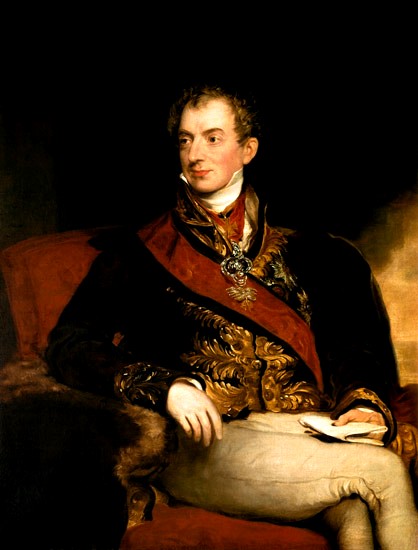
The fall of Prince Metternich, 1848


On 13th March 1848 Prince Klemens von Metternich was forced to relinquish his post as Chancellor of the Austrian Empire and flee to exile in England. One of the greatest statesmen of 19th Century Europe had been toppled at last, after nearly 40 years of high office (Foreign Minister from 1809 to 1821 before becoming Chancellor in addition to his former role).

1848 is often termed the “Year of Revolutions”. Only a few weeks previously, the French King Louis-Philippe had been chased from the throne and replaced by Napoleon III. Now the spirit of revolution moved to Vienna.

Seizing their chance, a large group of students marched on the Hofburg imperial palace, to be met with gunfire at first but then realization on the part of the Austrian royal family that change had to come.

A deal was struck whereby the Habsburgs clung to their throne but Metternich was figuratively thrown to the wolves.

From the point of the view of the revolutionaries, this was what they really wanted. Their demands were for liberty for the people and an end to absolutism, and Metternich had been the main obstacle to achieving those aims.

Metternich had been the right man for the job when the job had been rebuilding Europe after the defeat of Napoleon I. He had been one of the chief architects of the New Europe that was instituted at the 1814 Congress of Vienna, at which he usually got his own way.

However, 30 years of relative stability were now coming to an end, and Metternich was no able longer to pull all the strings.

He was also hated in his country for his arch-conservatism and the secret police that he employed to keep dissenters at bay. He once boasted that he kept an eye on everything and that nothing happened of which he was unaware. He also claimed that he had never made a mistake in his whole life.

But even with his network of spies and agents keeping him posted, Metternich could not withstand the power of the people when it turned against him. At the age of 74 he had to leave Austria and head for England, where the political situation was more stable.

Metternich was eventually allowed to return to Austria, but on condition that he did not re-enter the political scene. He died in 1859 at the age of 86.
© John Welford

Sunday, 24 January 2016

The death of Charlemagne, 814


28th January 814 was the day on which a great European emperor died. He is generally known to history as Charlemagne, which points to his importance as King of the Franks and thus the father of the French nation, but he was actually more German than French.

The empire controlled by Charlemagne stretched across the whole of present-day France, Belgium and the Netherlands, nearly all of Germany and Austria, and parts of Italy, Hungary and Spain. The dynasty that he established, named Carolingian, ruled until 987.

Charlemagne died from influenza at the age of 71 and was buried in the cathedral that he had built in his capital city of Aachen, which the French prefer to call Aix-la-Chapelle.

Charlemagne even managed to become a saint in the eyes of some believers. However, he was canonised in 1165 by Pope Paschal III, who was an anti-pope established by the Holy Roman Emperor Frederick Barbarossa. Charlemagne is therefore not included on the list of saints approved by the Catholic or Orthodox Churches.


© John Welford

Tuesday, 19 January 2016

Frederick the Great


24th January 1712 was the birth-date of King Frederick II of Prussia, known to history as Frederick the Great.

He is known primarily as a military genius who established Prussia’s influence as a leading power in Europe and laid the foundation for this northern German territory to become the dominant force in what eventually become united Germany.

When he became king in 1740 the Prussian army numbered 83,000 men; by the time of his death in 1786 that figure had risen to 190,000 out of a total population of 2.5 million. Military might was the foremost consideration of Frederick’s foreign policy – it has been estimated that during the Seven Years War of 1756-63 Prussian losses amounted to 15% of the entire male population. However, despite this casualty rate Frederick managed to inflict defeats on all his enemies, most notably Austria and France.

However, Frederick was also one of the most cultured European rulers. He composed music, played the flute, wrote poetry and collected art. He was a patron and friend of Voltaire, with whom he shared a sceptical view of life. He was also an enlightened ruler, albeit an autocrat, who abolished the use of torture within the Prussian judicial system.

Despite his nationalism and aggression towards his European neighbours, Frederick rarely spoke German, preferring to write and speak mostly in French.


© John Welford

Monday, 18 January 2016

Charles V, Holy Roman Emperor


24th February was an important date in the life of Charles V, the Habsburg Holy Roman Emperor from 1519 to 1546 and ruler over vast swathes of Europe, including Spain, plus Spain’s Latin American colonies.

24th February was the date of his birth in 1500, to the interestingly nicknamed Philip the Handsome and Joanna the Mad. It was from their union that the Spanish provinces were united and became part of the Habsburg Empire under Charles. By the age of 19 he was master of more land in Europe that anyone since the emperors of ancient Rome.

24th February 1525 was not only Charles’s 25th birthday but also the day on which he won a decisive victory at the Battle of Pavia in northern Italy. His opponent was King Francois I of France who was to spend the next year as Charles’s prisoner in Madrid.

Traditionally, Holy Roman Emperors were crowned by the Pope, but Charles delayed this event for more than ten years, to his 30th birthday on 24th February 1530. The event took place in Bologna rather than Rome. For one thing, much of Rome still lay in ruins after Charles had sacked it in May 1527 with considerable savagery and taking of innocent lives; for another, he was worried about the advance of the Ottoman Turks from the east and did not want to travel too far south into Italy.

Charles was crowned by Pope Clement VII, whom he had held prisoner in Rome and forced into exile for a time due to the destruction of the Papal apartments. It was while Clement was in this humiliating situation that he was approached by envoys from King Henry VIII of England to ask for an annulment of his marriage to Catherine of Aragon, who was Emperor Charles’s aunt. Being in no great hurry to antagonise Charles any further, Clement refused, and the end result was the English Reformation.

Charles V’s coronation, conducted by a Pope under severe duress, would prove to be the last such ever held. Although the Holy Roman Empire would continue for nearly another 300 years, its claim to be “holy” really ended with that final coronation on 24th February 1530. Given the previous track record of the emperor it was a mockery of the word in any case.


© John Welford

Sunday, 10 January 2016

Andreas Hofer, a rebel against Napoleon Bonaparte


On 20th February 1810 Andreas Hofer was executed by firing squad, on the orders of Napoleon Bonaparte.

Andreas Hofer was an innkeeper who lived in the Tyrol, which is the westernmost part of present-day Austria. In Hofer’s time the Tyrol was part of the Austrian Empire which was coming under severe pressure from France to cede control of it to Bavaria, which was part of Napoleon’s growing European Empire. This is what happened in 1809, much to Hofer’s disgust.

Hofer led an insurrection and defeated the Bavarians at the battle of Berg Isel, after which he declared himself Commander in Chief of the Tyrol, headquartered at Innsbruck. Emperor Franz agreed to take the Tyrol back under his protection, but this did not please Napoleon who once again demanded that the province be ceded to Bavaria.

Andreas Hofer continued his resistance, which led Napoleon to put a price on his head. Hofer was eventually tracked down to a shepherd’s hut in the mountains, from where he was taken barefoot in the snow to Mantua, in northern Italy.

After a rigged trial Andreas Hofer was sentenced to death, although his judges did not seem to be particularly keen on having the sentence carried out. However, Hofer’s fate was sealed when Napoleon sent a message demanding to know the date set for the execution. 

That date was 20th February, when Hofer bravely faced the firing squad – refusing a blindfold and himself giving the order to fire. His remains were taken back to Innsbruck 13 years later and his memory is still revered in the Tyrol.


© John Welford

Sunday, 3 January 2016

Tomas de Torquemada, the Inquisitor


16th September 1498 was the day on which died one of the most evil men to have ever lived. However, like many such people he was utterly convinced that he was on the side of justice and was doing “God’s will”. It is amazing how religious zeal can persuade some people to act in the most unspeakably cruel and villainous ways.

The man in question was Tomas de Torquemada, a Dominican monk who, in 1483, had been entrusted by Pope Sixtus IV to lead the “Holy Inquisition” in Spain. The aim of this institution was to root out heresy from Spain, which Torquemada understood to mean discovering and punishing “Marranos”, Jews who had ostensibly converted to Christianity but who still practised Judaism in secret.

Torquemada took his work extremely seriously, gathering a network of spies and arming himself with “enforcers” in the shape of 50 armed knights and 200 foot soldiers. There was nothing he would not do to extract a confession, followed by punishment. It is true that not every victim was burned at the stake – this was the fate of possibly as few as 2,000 discovered Jews – but at least 25,000 others received less severe punishments after they had been tortured into confession.

It seems unlikely that Torquemada’s career was unknown to the Nazis of a later age, because there are distinct parallels between their persecutions of Jews. Torquemada confiscated Jewish property, flogged Jews in public and forced them to wear yellow shirts with crosses sewn on them – a chilling precursor of the yellow stars that the Nazis forced German Jews to wear.

He issued guidelines to enable Christians to identify the secret Jews among them. One was to take note of people who wore clean clothes on Saturdays rather than Sundays.

Torquemada even had his own “final solution”. In his efforts to create a “pure-blooded” Spain he concluded that all the Jews must be expelled. He went to the King and Queen and made this demand, but they were also approached by some wealthy Jews who offered them 30,000 ducats if they refused to do what Torquemada wanted.

This was an unfortunate sum to have offered, because it played right into Torquemada’s hands. He challenged the monarchs by pointing out that Jesus had been betrayed by Judas for 30 pieces of silver and now they were about to do the same for 30,000. The jibe worked, and 160,000 Jews were forced to leave Spain within three months. Any left behind would have been executed.

It beggars belief what some people are prepared to do in the name of religion, which is one reason why the current writer would be perfectly happy if the world gave up religion altogether, although I appreciate that this is not likely to happen any time soon! The problem arises when people convince themselves that their religion is the only true one and that everyone else’s must therefore be wrong. It is a short step, in the minds of many, from this position to the belief that the wrongs of others must be corrected in order that they can be “saved”. The lengths to which they go in order to convert others to their point of view are clearly very varied, but it is when “no, I won’t change my religion” is not taken as the end of the matter that the real trouble can start.

As a footnote to the story of Torquemada, there is another parallel to the excesses of the Nazis. One of the worst Jew-baiters, Reinhard Heydrich, was known to have had a Jewish grandmother. The same was true of Tomas de Torquemada.


© John Welford

Thursday, 31 December 2015

Gustavus Adolphus, King of Sweden


On 12th November 1611 a 16-year-old was crowned King of Sweden. This was Gustavus Adolphus, who did a huge amount to reform his country and, as a military general, was instrumental in saving the Protestant movement in Europe during the Thirty Years War.

He succeeded the tyrannical King Charles IX who, at his death, had left Sweden fighting three simultaneous wars. Gustavus settled these quickly, learning some of the arts of war in the process, before concentrating on domestic matters.

He persuaded the nobility of Sweden to forego some of their ancient privileges for the good of the country, and also introduced a modern education system that allowed talented people to rise to the top. The government of Sweden became one of the most efficient in Europe.

The Thirty Years War broke out in 1618 as an attempt by the Holy Roman Empire (a loose confederation of central European states) to turn back the tide of Protestantism in Europe. Gustavus Adolphus stayed on the sidelines until 1630, but his intervention was decisive.

He advanced rapidly through northern Germany and won a convincing victory at the Battle of Breitenfeld (near Leipzig) in September 1631. The Swedes then rampaged through southern Germany, capturing the cities of Munich, Nuremberg and Augsburg.

The Swedes had another major victory at Lützen, also near Leipzig, on 16th November 1632, but Gustavus Adolphus was killed while leading a cavalry charge during an early phase of the battle. His death was a setback for the Protestant cause and was a major reason why the war was to drag on for another 16 years.


© John Welford

Maximilian I, founder of the Habsburg Empire


Emperor Maximilian I died on 12th January 1519. He has a good claim to be awarded the title of founding father of the Austro-Hungarian Empire, although he did so not by force of arms but by contracting successful dynastic marriages for his children and grandchildren, having been the beneficiary of one himself.

Maximilian was born in 1459, the son of Frederick III, a member of the Habsburg family and the Holy Roman Emperor. Although the title sounds grand enough it did not mean a great deal in practice, the “empire” being a loose association of mid-European states, their only strong feature of commonality being their opposition to the growth of Protestantism in northern Europe.

Frederick chief opponent was Charles the Bold, the Duke of Burgundy. In order to turn Charles into an ally, he engineered a marriage between Maximilian and Charles’s daughter Mary, which took place in 1477 after Charles had died in battle.

Mary was heiress to the vast territories of Burgundy in eastern France and also the lands occupied by much of modern Belgium and the Netherlands. She died in 1482 after a riding accident, leaving two young children, one of whom, Philip, was now the titular Duke of Burgundy.

Once Philip was old enough, he was married to Joanna of Castile, the heiress of most of the Iberian peninsula. However, he died at the age of 28 in 1506, having become King of Castile for a short time before so doing.

Philip left two sons, Charles and Ferdinand.  Their grandfather Maximilian got busy in the marriage market on their behalf, with the result that Ferdinand married Princess Anne of Hungary. Her brother should have inherited the thrones of Bohemia and Hungary but he was killed in battle in 1526, leaving Ferdinand to claim them.

Meanwhile, Charles was heir to all the Habsburg territories in Austria, Burgundy and Spain. After Maximilian’s death he married his cousin Isabella of Portugal while his sister married King John III, Isabella’s brother.

Between them, the Habsburgs therefore managed to rule much of Europe, the general aim being to keep the French in their place. At the height of his power, Charles’s empire encompassed most of modern Austria, Germany, Belgium, the Netherlands, Spain, parts of Italy, and vast swathes of the New World.

At the root of it all was grandfather Maximilian, who created an empire by marriage. The Habsburg empire only finally disintegrated at the end of World War I in 1918.


© John Welford